
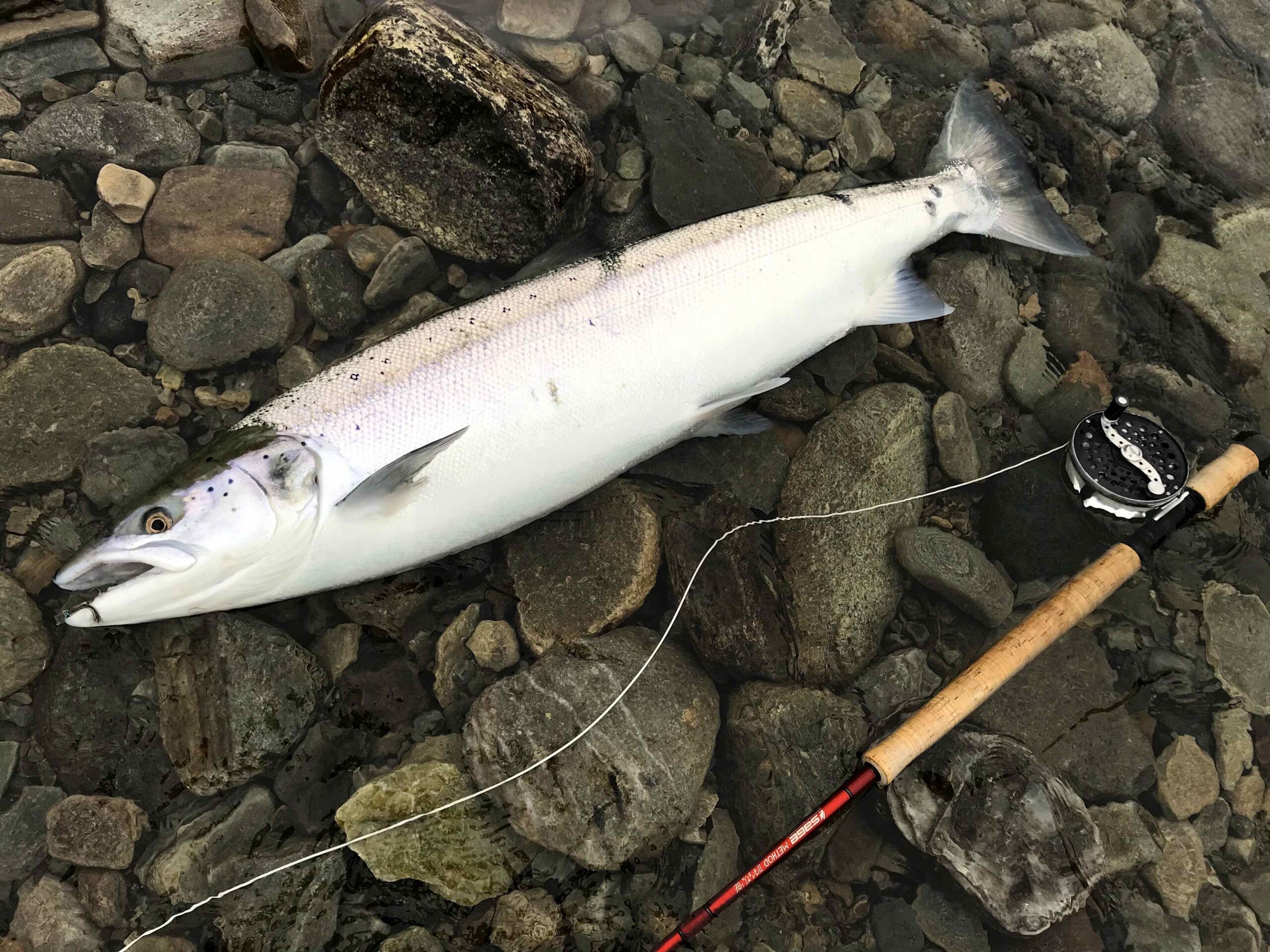
Riffling Hitch is a technique that is entwined in the world of dry fly fishing and, for that matter, also wake-fly fishing.
We want to separate it from both fishing forms and give it status as a unique sport.
Riffling Hitch is a form of fly-fishing centred around the fly’s movement on the surface. Often, very little commotion is needed to get full attention from the fish it originally was designed to catch: the Atlantic Salmon.
For the angler pursuing Atlantic salmon, the Riffling Hitch technique would probably best describe a quiet sport with lightly dressed flies that make a diminutive wake on the surface. Overdo the wake or commotion feature, which may scare the fish more than it tempts them.
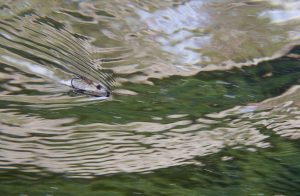 The riffling hitch fly works great on many rivers in the Nothern Hemisphere. It is not always predictable at what time the hitch fly is most efficient. Still, as soon as insects are visible by the river bank, there will be a good chance that the hitch technique could be up and running – Here, a small transparent tube fly – The V-FLY silver tippet...seen from the Salmons point of view.
Riffling Hitch: Not dry fly nor wake-fly
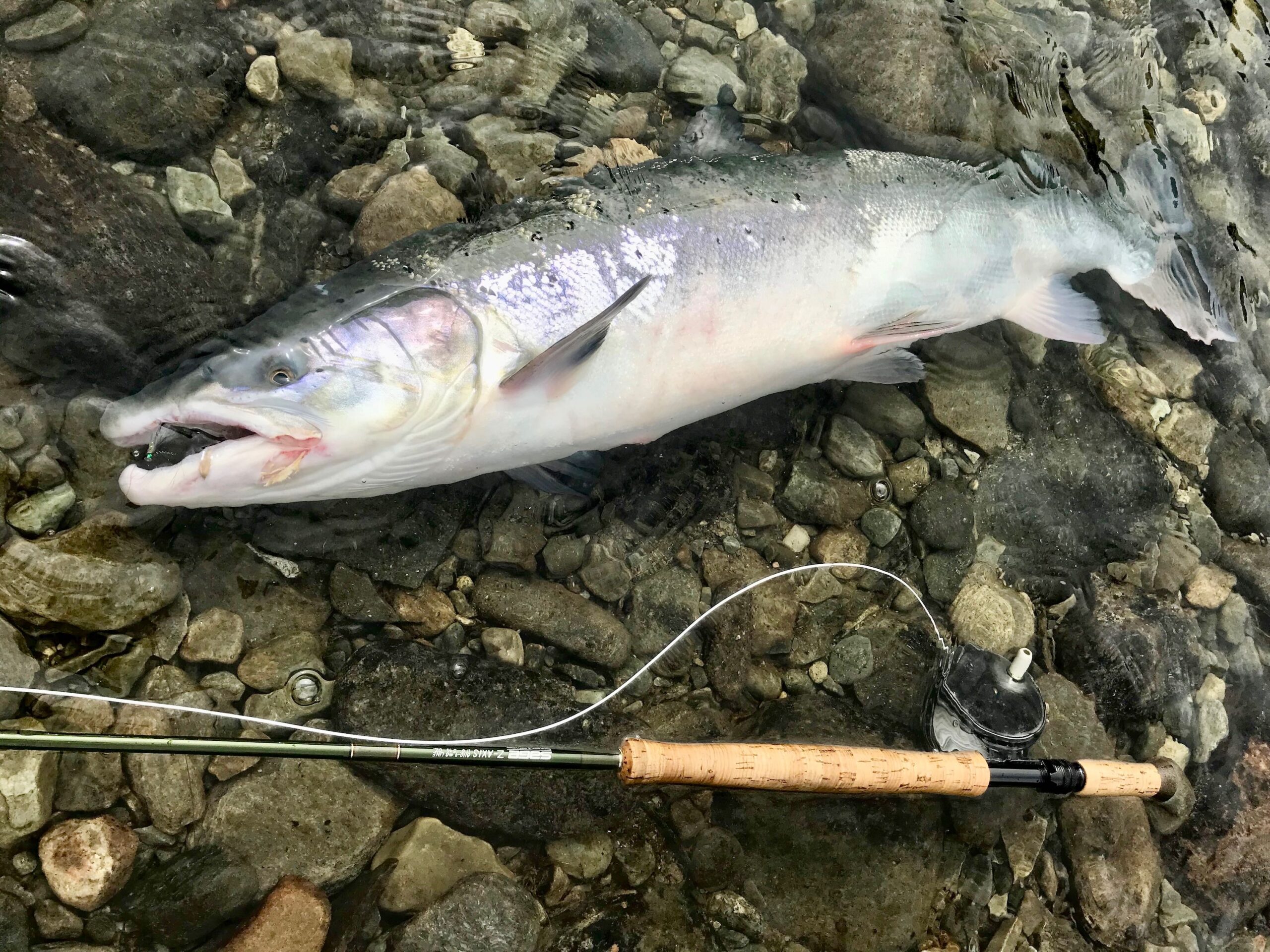
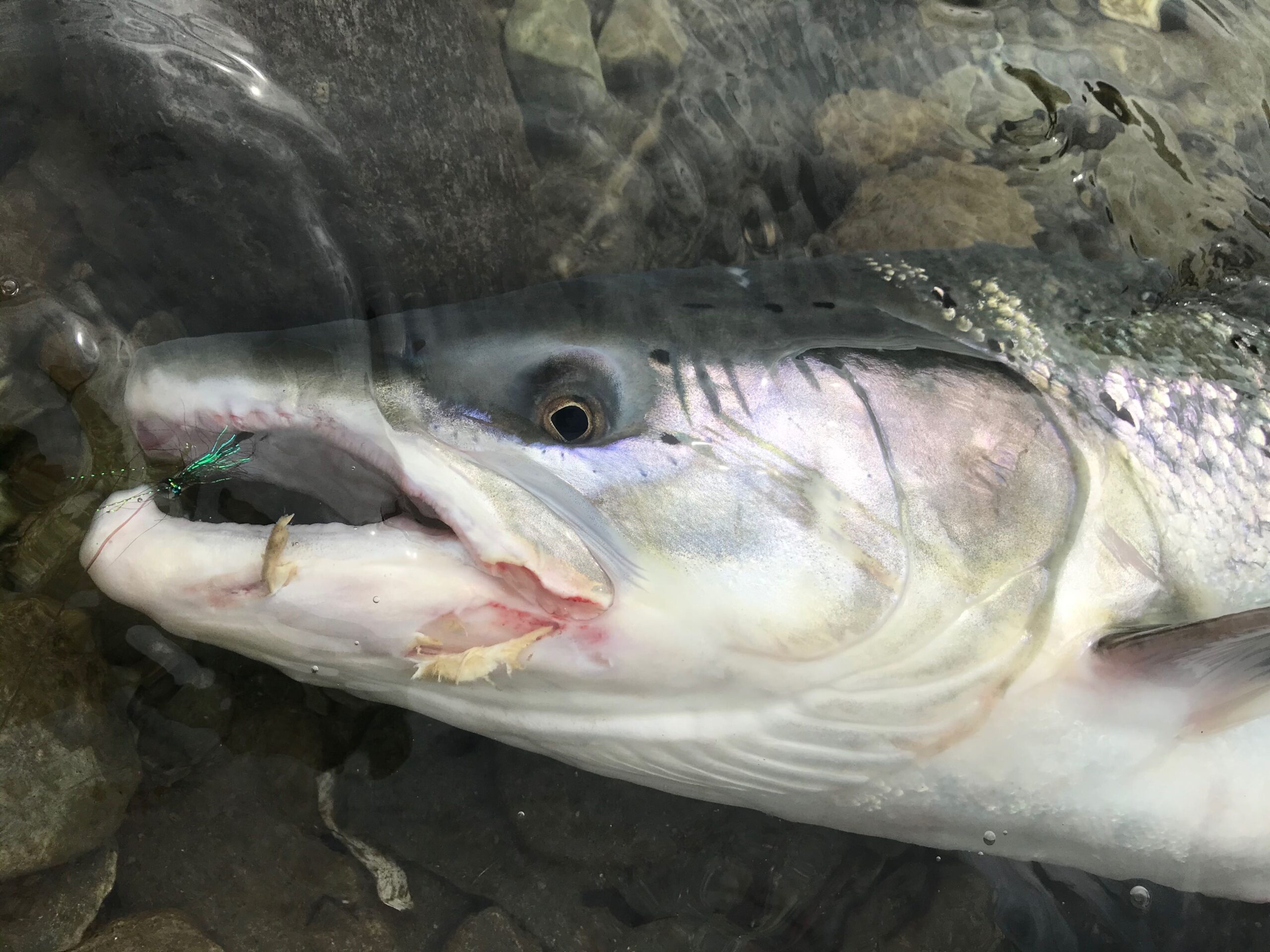
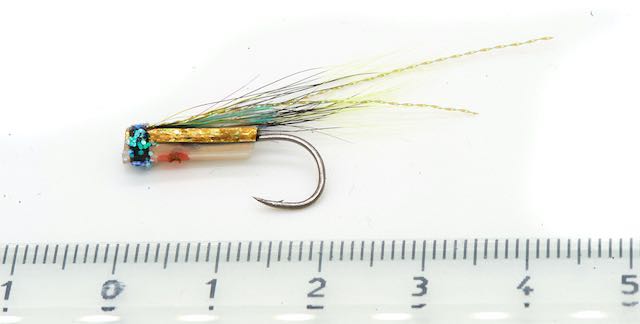
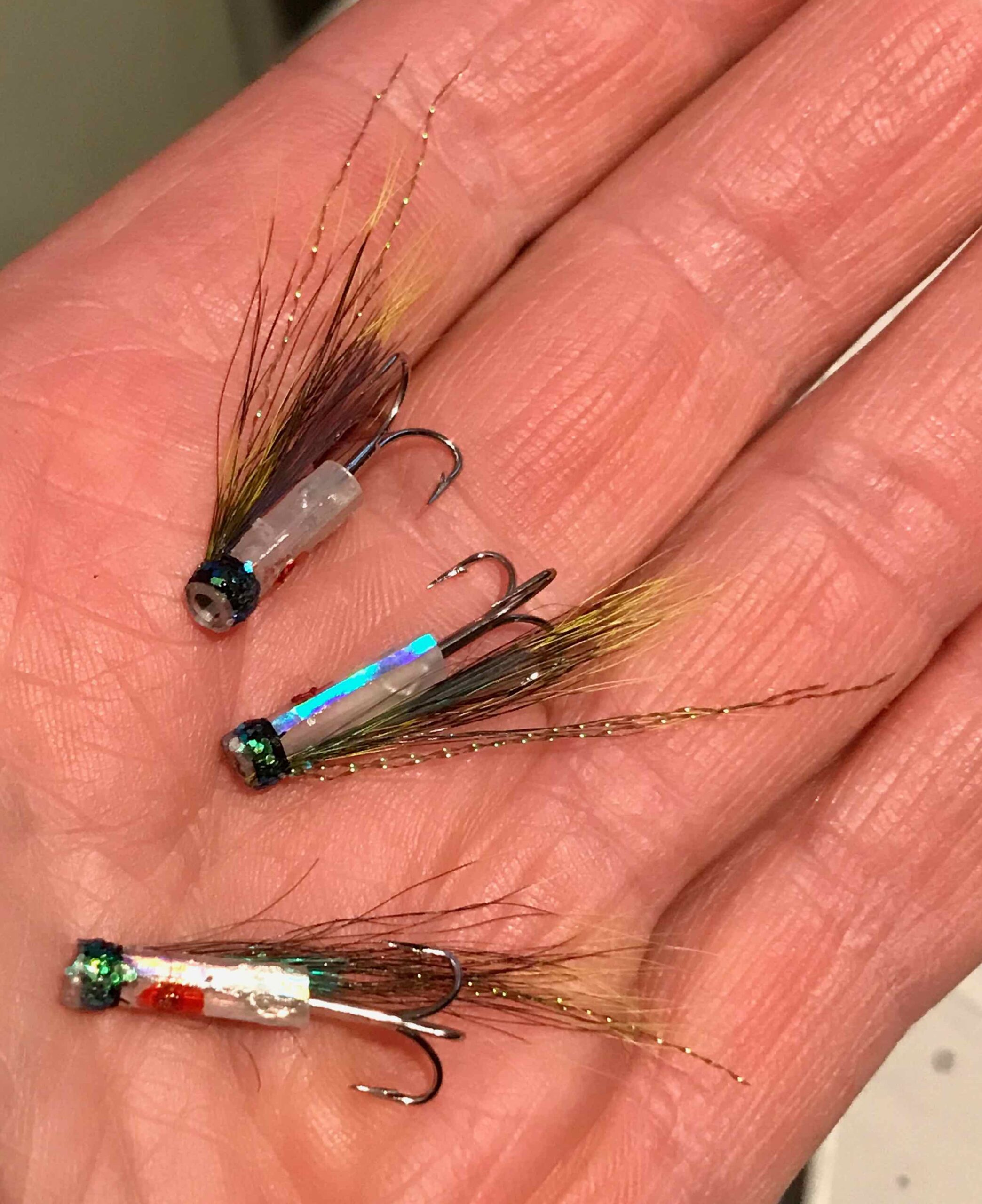
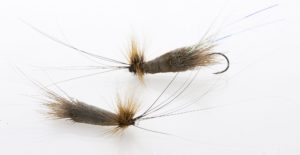
The Hitchman Fly ….probably one of the best riffling hitch flies you can use… Combination of see-through features… strong impression shimmering material combined with hairs from squirrel tail makes this tiny fly perfect for the job
What does the Riffling Hitch fly represent ?
An adult salmon grabbing a drifting insect in the surface or a small nymph-like wet fly below the surface is a part of the salmon life that easily could be explained with the experience it has had as parr in the river – Experiences that is part of a mutual genetic memory that Atlantic salmon has built on for 100 million years.
But what about the Riffling Hitch fly – what does this odd fly represent?
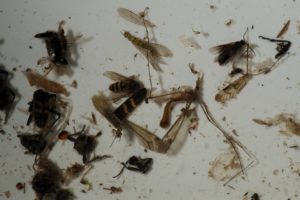 We know that the parr of the Atlantic salmon is one of the most, if not the most, surface-orientated hunters of the Salmonidae family. Various terrestrial beetles, spiders, crane flies, and water insects like Stoneflies, Mayflies and Caddisfly may be on the menu card.
Left: Partly dissolved land and water insects – taken from the stomach of an Atlantic salmon in Northern Norway – Some salmon do eat during their stay in the river! …and for some reason, particularly those inhabiting the rivers in the far North of Norway – Something biologist Mr M Johanesen from the University of Tromsø, Norway has made a study on Read more
Caddisfly is a historic snack.
The Caddisfly is an insect of importance to the juvenile salmon and trout – it will periodically frequent the river systems and trail forth and back on the water surface, laying eggs – doing so, they will make a fine V-wake behind them. The caddisfly also leaves tracks on the surface when they try to leave the water to become fully developed insects. Even though we can’t be conclusive about what the riffling hitch flies represent – we know that caddisfly patterns like our Monster Tube Caddis and small Riffling Hitch flies are very efficient. When caddisfly insects are abundant at the river – in times of caddisfly hatches, adult salmon will also be more eager to rise to other floating fly patterns – one could say that the abundance of insects spurs a greater awareness in adult salmon entering the river.
It would be naïve to accredit the success of particular flies or fishing methods like riffling hitch to insect life as we see it today – Hunting skills and levels of curiosity with various species of fish could very well have been formed 10´s of millions of years ago when rivers and insect life might have looked different from now.
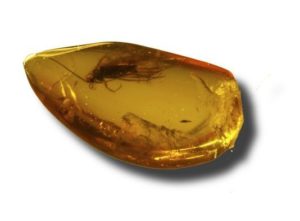 It would be naïve to accredit the success of particular flies or fishing methods like riffling hitch to insect life as we see it today – Hunting skills and levels of curiosity with various species of fish could very well have been formed 10´s of millions of years ago when rivers and insect life might have looked different from now.
Photo: A small caddisfly locked in time and space in this piece of amber from the Eocene epoch, lasting from about 56 to 34 million years ago – The caddisfly insect is found fossilized in rock dating even further back – to The Triassic about 250 to 200 million years ago – It could be neat to believe that the success with the Riffling Hitch techniques was linked with the life and behaviour of the caddisfly.
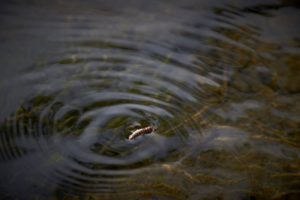
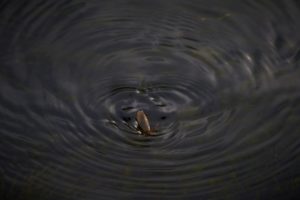
Adult caddisfly fluttering across the river surface – And a caddisfly pupa that just has left the casing trying to get to safety on dry land. Dangerous moments in the life of the Caddis – and maybe it is this particular behaviour of the caddisfly insect that makes the riffling hitch technique so efficient – the insect trying to leave the water
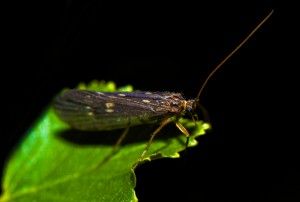 See and read more on the caddisfly insects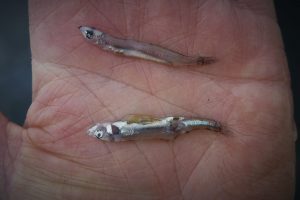
Shimmering material on hitch flies attracts fresh running salmon
No doubt, shimmering and twinkling material has a great effect on Atlantic salmon. This effect is also very prominent with riffling hitch flies, something we have seen with various flies we have used over the years. The clear tubing and iridescent material make fresh running salmon hit the fly. It could be that the small hitch flies resemble small fleeing baitfish f.o sand eels or small juvenile herrings like these two found in the stomach of a freshly caught salmon. See our separate page on what salmon eat in the sea.
Read more about our thoughts and ideas on iridescent and shimmering material in flies.
Tiny fleeing baitfish - is that what the hitch fly resembles?
 Here the very effective Hitchman fly available in the Fishmadman shop – A clear tube fly with small iridescent features. A perfect combination for fresh running salmon
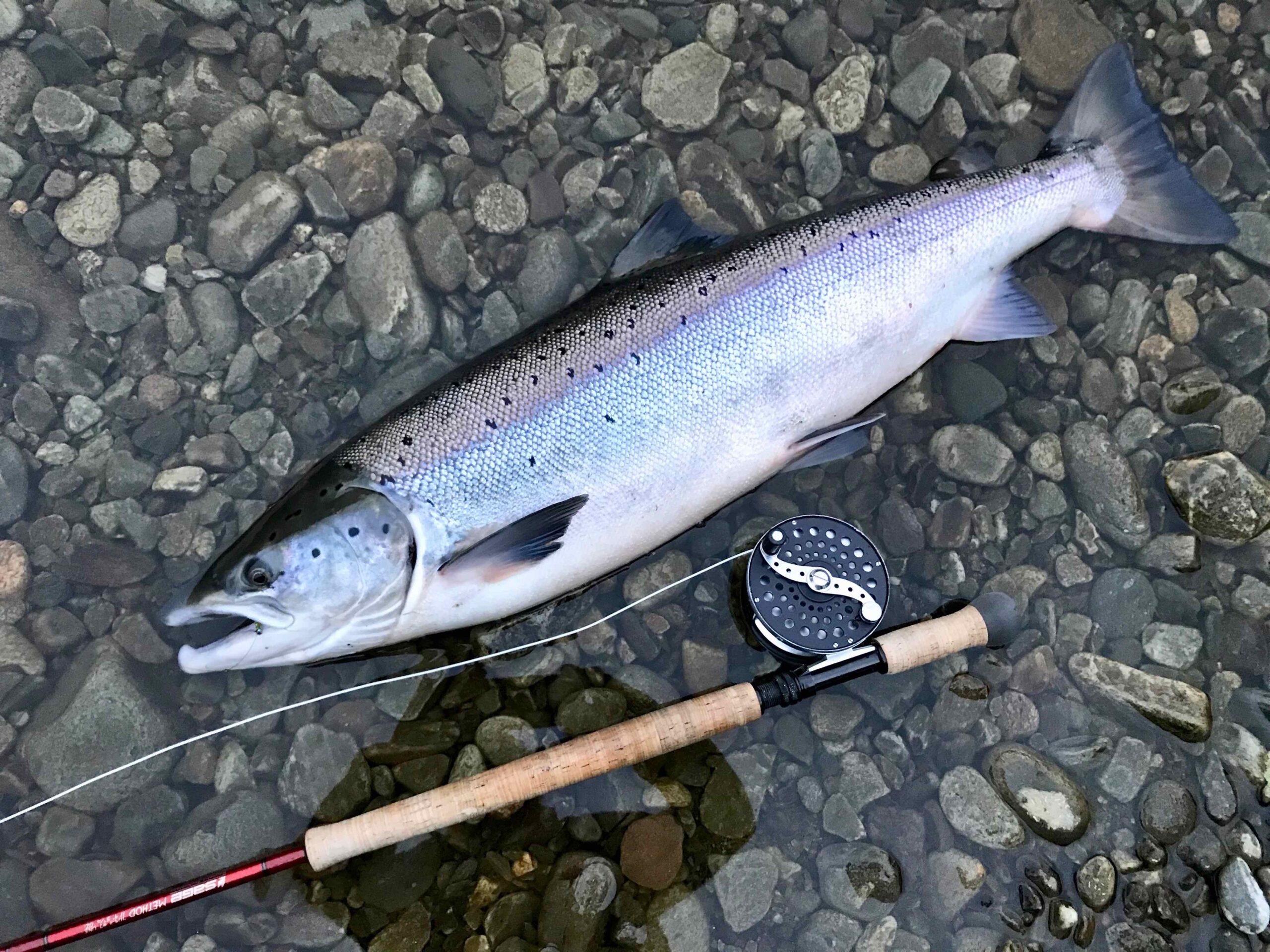
Fresh from the sea …87 cm (34 1/4 inch) This Atlantic Salmon…did not hesitate one second when it took the tiny Hitchman riffling hitch fly (This series of iridescent tube hitch flies will be available in the Fishmadman shop from 2020)
During dusk, the fish had moved out of the main stream into 20 inches of slow water and the fly had to be worked (fished with added speed) to gain the needed hitch effect.
Hitching in fishing history
Riffling Hitch as a fishing technique arose during almost a century of fly fishing traditions. Allegedly the method was developed as a coincidence by Newfoundland anglers who at the beginning of the 20th century, would have recycled damaged gut-eye flies discarded by English visitors …
Flies were recycled by tying them directly to the leaders using a series of hitches… That would have made the flies trail on the surface – creating that all-important V-shaped wake.
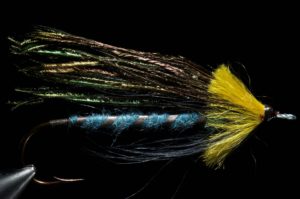 Victorian salmon fly The Beauly Snow fly – with an eye of twisted gut. Allegedly the Riffling Hitch method was developed as a coincidence when anglers from Portland Creek in Newfoundland started re-using discarded gut-eye flies
Flies were recycled by tying them directly to the leaders using a series of hitches… Evidently, that would have made the flies trail in the surface
The 1940's
During the 1940s Lee Wulff saw local salmon anglers at the Portland Creek in Newfoundland using the Riffling Hitch technique or riveling hitch as it also is called by the Portland Creekers. As an outdoor journalist, he popularized the Riffling Hitch sport. Still today it is a favoured sport on many Canadian salmon rivers and accounts for thousands of fish being caught yearly.
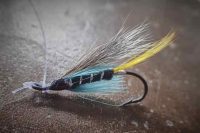
Fly tied to the tippet the traditional Portland way – Here done on one of our special Riffling Hitch Blue Charm flies – Fly is attached with a normal grinner knot…then a double hitch is tied to the head of the fly…When tying flies for riffling hitch fishing, remember to make enough room in front of the head of the fly to make the double hitch.
Lee Wulff Hitch Specials
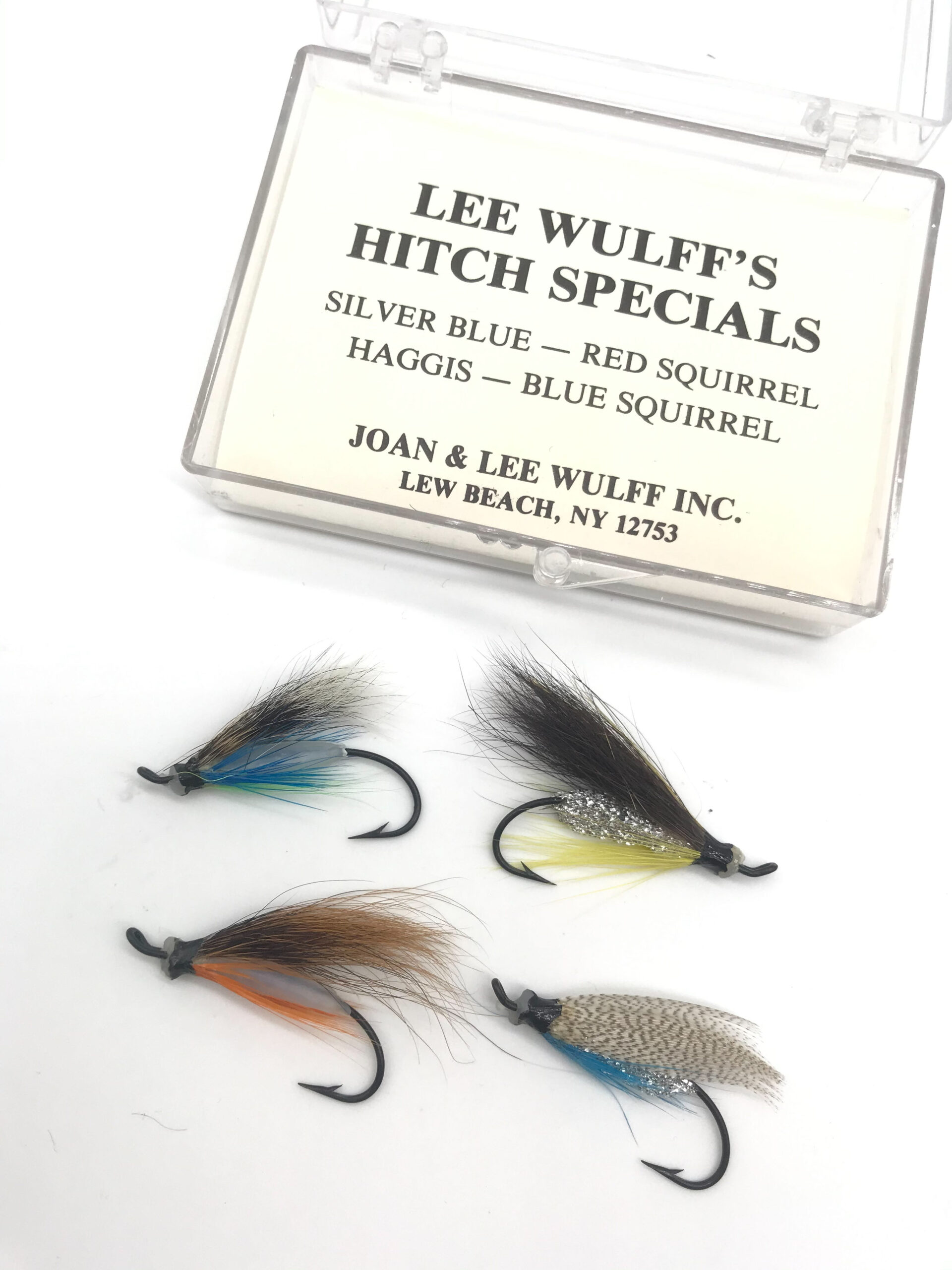
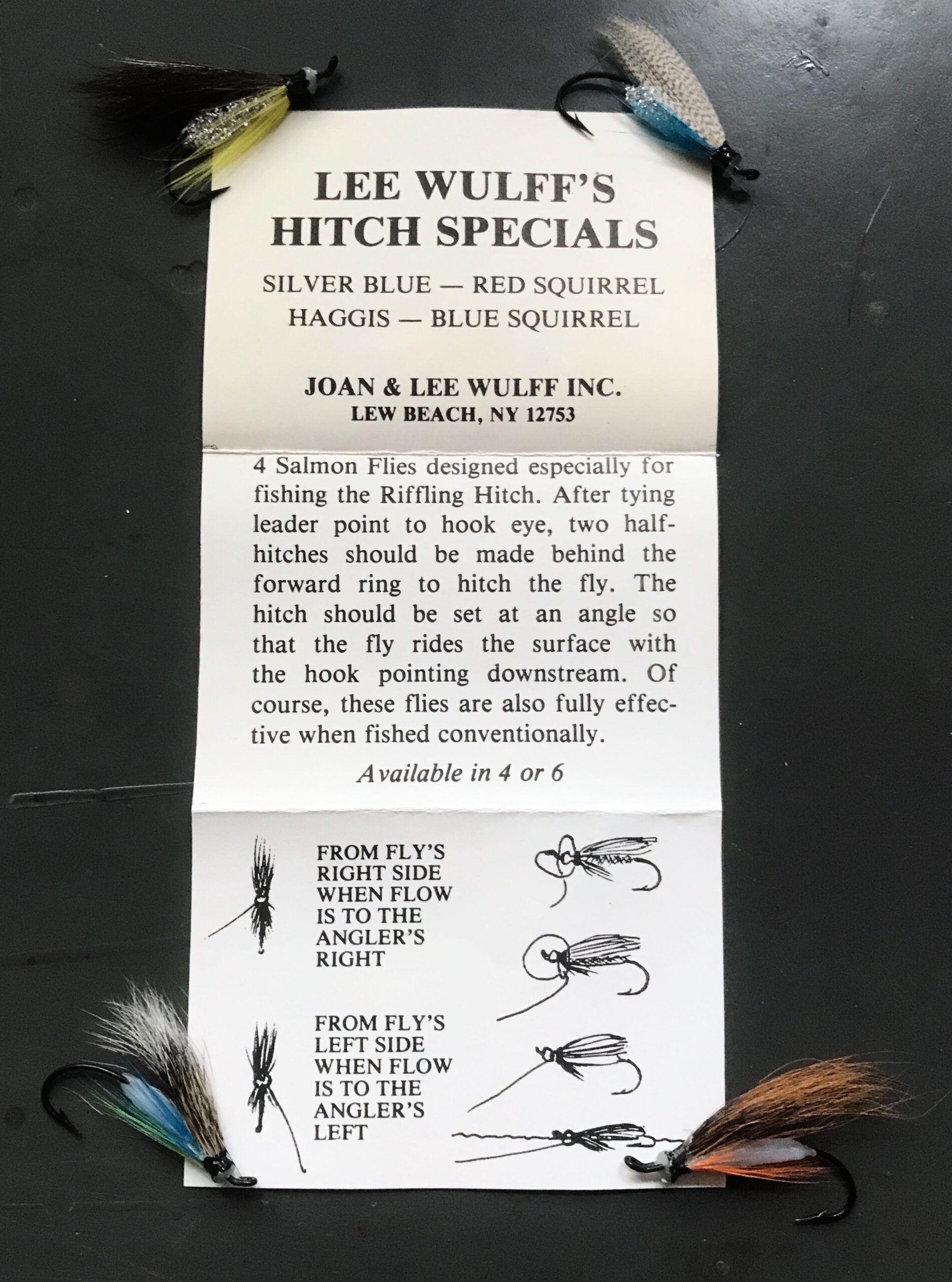
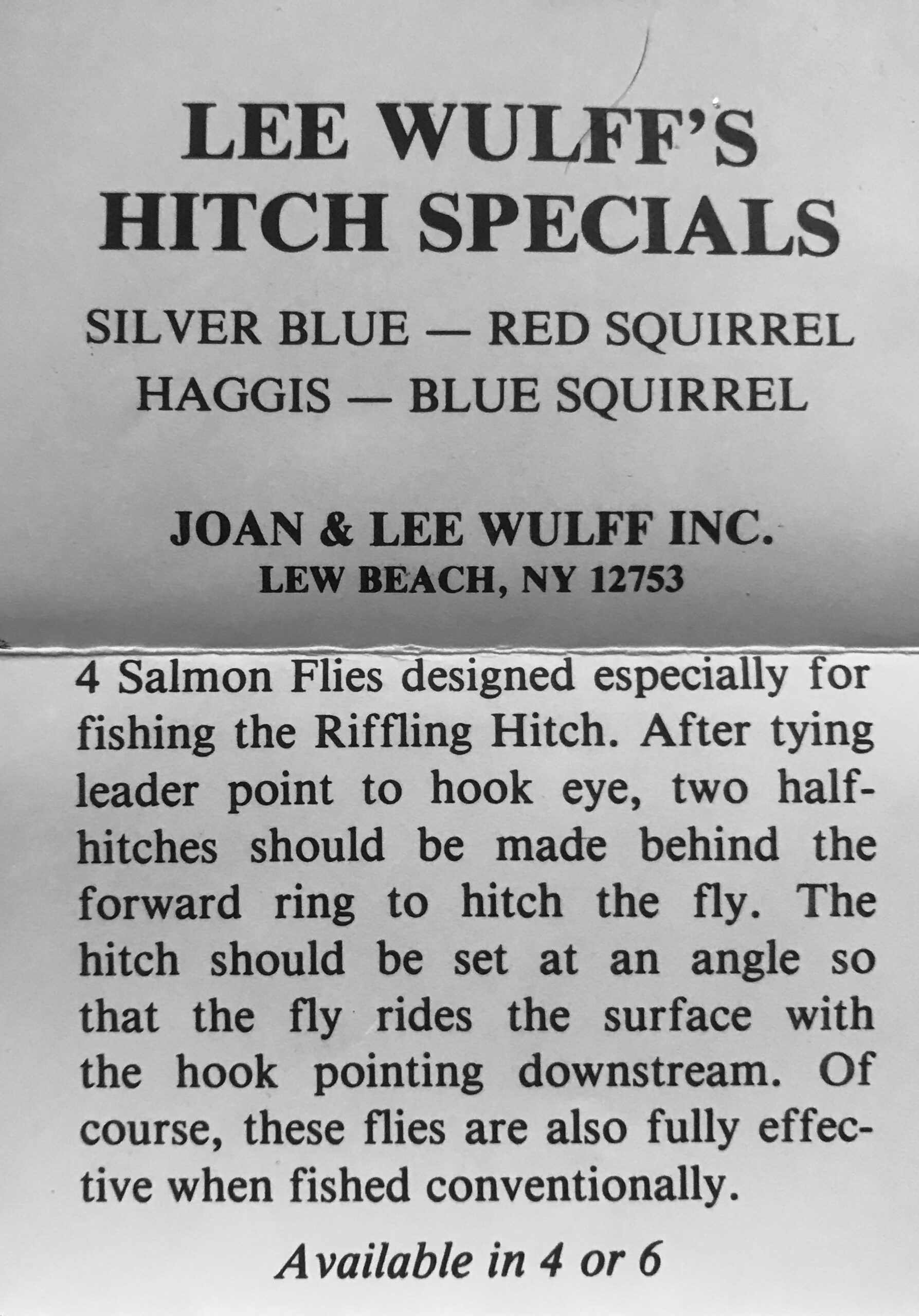
This box set of 4 single hook flies is a true example of Lee´s ingenuity and a deep interest in riffling hitch fishing. This box-set was initially one of two available sets of experimental flies that Lee Wulff designed with a moulded body of nylon – a form of body design he also incorporated in his famed Surface Stonefly patterns.
Hitch flies the European way
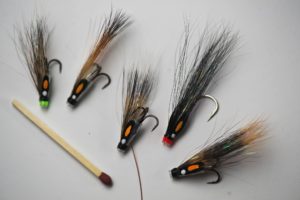 Also, the UK and Scandinavian anglers enjoy the fruit of the Canadian coincidence, but where anglers in Canada will work the Riffling Hitch the traditional Portland way with hitched knots and flies tied on single or double hooks – Scandinavian and UK anglers will use a small tube fly with a hole in the body. The hole or holes will either be on the side or as on our V-FLY: in the centre of the belly.
Read more about Riffling Hitch Know How.
Right: A batch of Fishmadman V-FLY a super Riffling Hitch fly 
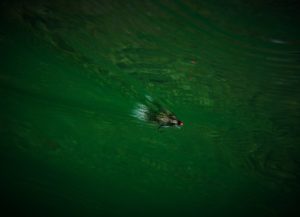 Here: Small Riffling Hitch V-FLY ™ seen from the salmon’s point of view
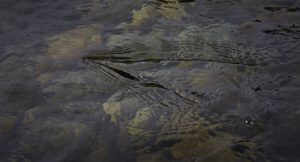 Here: riffling hitch fly: how it makes a V on the surface
1976 the earliest mentioning of riffling hitch flies tied on a tube
It is probably in an issue of the UK fishing magazine Trout & Salmon from May 1976 that the angling society learns about the very first riffling hitch fly tied on a tube.
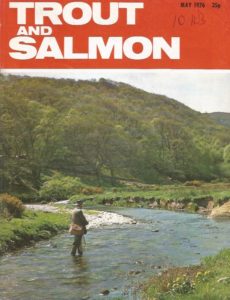
It is probably in an issue of the UK fishing magazine Trout & Salmon from May 1976 that the angling society learns about the very first riffling hitch fly tied on a tube. The author Mr Geoffrey Hopton mentions how to add a hole to the side of the tube to make the tube go to the surface.
The Trout & Salmon story from 1976 does, sadly enough, not show any photos of the very early tube-hitch fly, but the text describes in detail how it is made, and a small b & w illustration shows the principal of the design. Please take the time to read this fine article on surface fishing for salmon…Find article here
Special thanks go out to long-time riffling hitch angler Mr Martin Stansfeld for helping us find this historic piece of data. Martin is also the proud owner of the Kinnaber beat on the North Esk River in Angus, Scotland. A great beat for fishing the riffling hitch fly
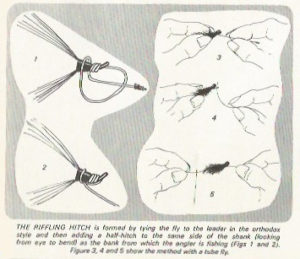
The Trout & Salmon story from 1976 does sadley enough not show any photos of the very earlie tube-hitch fly. Still, the text describes in detail how it is made, and a small b & w illustration shows the principle of the design.
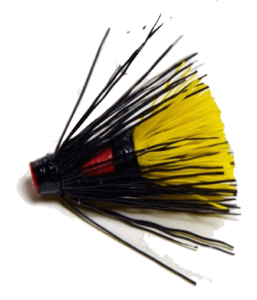
1980´s Derek Knowles Yellow Dolly Fly - One of the first riffling hitch tube flies
Mr. Derek Knowles was one of the first anglers who deliberately used plastic tubing to tie hitch flies on – Derek Knowles both used his tiny tube flies – waking across the river… but also fished his flies at deaddrift
 In a chapter in Hugh Falkus’s book: Salmon Fishing from 1984 and later in the book; Salmon on a Dry Fly from 1987 by Mr Knowles, European anglers learn a new approach to salmon fishing, with tiny floating flies fish across the surface.
Right: The Yellow Dolly fly from the 1980s – From the hands Mr Knowles. one of the grandfathers of the riffling hitch tube flies European anglers use today.
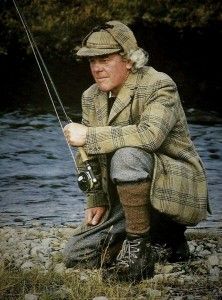
1988 Mr. Crawford Little writes about the riffling hitch tube fly with a hole in the side
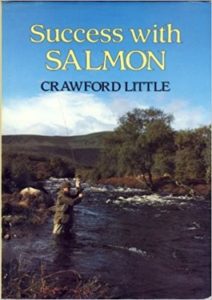 English salmon guide and author Mr. Crawford Little who in his book: Success with Salmon from 1988, was one of the first anglers to published an example of the special tube that would pull to the surface – A tube that would have the leader inserted through the side or belly of the tube as opposed to the conventional way where the tube was inserted through the front of the tube.
Crawford Little used the analogy between the technique of ottering a rowing boat in a river and the way one could build a tube fly that would pull to the surface

In the book Success with Salmon, Mr Crawford explains the hitch tube flies. Mr Crawford Little used the analogy between the technique of ottering a rowing boat in a river and the way one could build a tube fly that would pull to the surface. Ottering is best described as how one can force an object to cut away from you by pulling from the side of the object. Here it is trolling anglers using a so-called: Sideplaner or planer board to pull plugs and bait away from the boat.
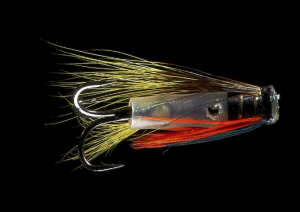 Here is the popular Munroe Killer on a tiny Riffling Hitch tube. This fly is made with holes in both sides. This version can be used from the left and right banks of the river – using either a left or right side hole on the fly.
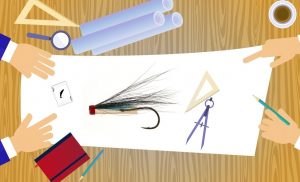
Hole in the side or in the belly of the riffling hitch tube fly?
We have a highly technical page explaining some of the aquadynamic aspects of building the ultimate hitch tube flies …Take me to this nerdy page.
Riffle hitch and waking fly - tricks and inspiration
Salmon flies are not equally good to use as Riffling Hitch flies ! There will be fly patterns that work better than other
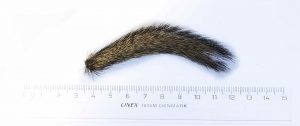 Use thin hair! We have, through the years, noticed how Riffling Hitch flies tied with squirrel’s fur have a particular alluring ability… The best hair is found on tails from small or young squirrels; therefore, we recommend you hand-pick the tails for your fly tying – or buy them from us.
If you tie your Riffling Hitch patterns on a single or double hook, you should leave enough room in front of the hook so you will be able to fit in the hitch knots.
 Riffling Hitch in high & brown river
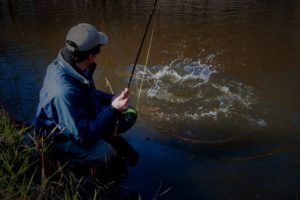 Riffling Hitch in high & brown river
Fishing a tiny fly on the surface during a rising river going muddy – might not be the first thing that springs to mind… never the less… Riffling Hitch can be an extremely efficient technique under such circumstances. Fish will travel close to the bank and surface… keep the fly on a short line – work yourself downstream with short casts and a rod held high. Be ready for a pounding heart when Mr. Salmon comes hammering out of the surface. In case you hook up on such a short line – strike immediately
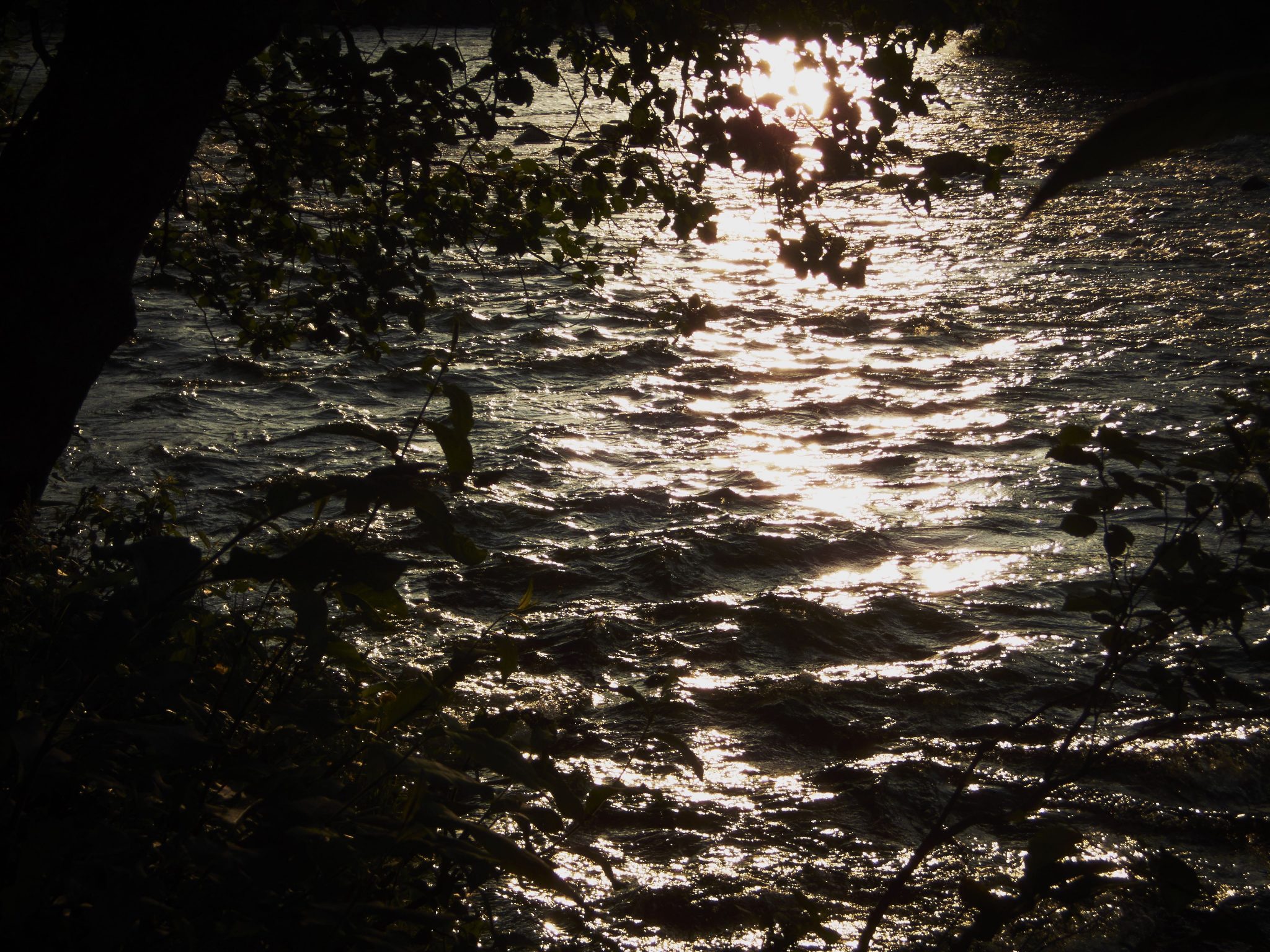
The Riffling hitch fly will fish well in many of the same places you usually would want to fish with a sub-fly – But a small hitched fly will also fish slow water, which could be otherwise very difficult to fish. Broken water like this small run is, in my book, the best kind of hitch water – the take can be almost invisible to cascades of water as the salmon hit the fly.
Shallow rivers is normally prime rivers for the riffling hitch technique – but the depth of water is not a bar for the riffling hitch technique and big fish will readily rise from the depth to intercept a micro riffling hitch fly
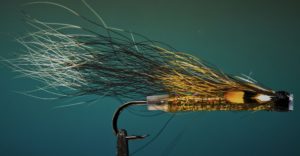 Longwing version of the Riffling Hitch V-FLY ™ with a shiny body…It may look like nothing on a turbulent river – but it will be seen by salmon that will pluck it out of the surface in much the same way as a salmon hitting a fast-fished plug. Generally, riffling hitch flies are small, lightly dressed flies equal to # 10 – 12 wet flies – and bigger hitch flies move into the form of fly fishing where we would use bigger sunrays fished across at 90 degrees..retrieving them fast …Read more about this here
See our long-wing version in the shop.
Riffling hitch is one of the diseplines in salmon fishing where the questions about flies and fishing – thorughly expose the fact that we know so little about the importance of details in salmon flies.
Hitchcraft
 The late Riffling Hitch angler, Author and Chairman of NASF (National Atlantic Salmon Fund) Mr. Orri Vigfússon also tied his Riffling Hitch flies on small pieces of tube here a tiny black and blue version from Orri´s fly box
If you consider going to Island, remember to bring small riffling hitch tubes – dressed sparsely like this one – seen to the right.
To see two of the magnificent rivers Orri fished, go to Angling Club Strengur

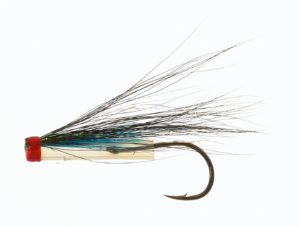
If you consider going to Island, remember to bring small riffling hitch tubes – dressed sparsely like this one – seen to the right
– See this favoured riffling hitch tube fly in our shop
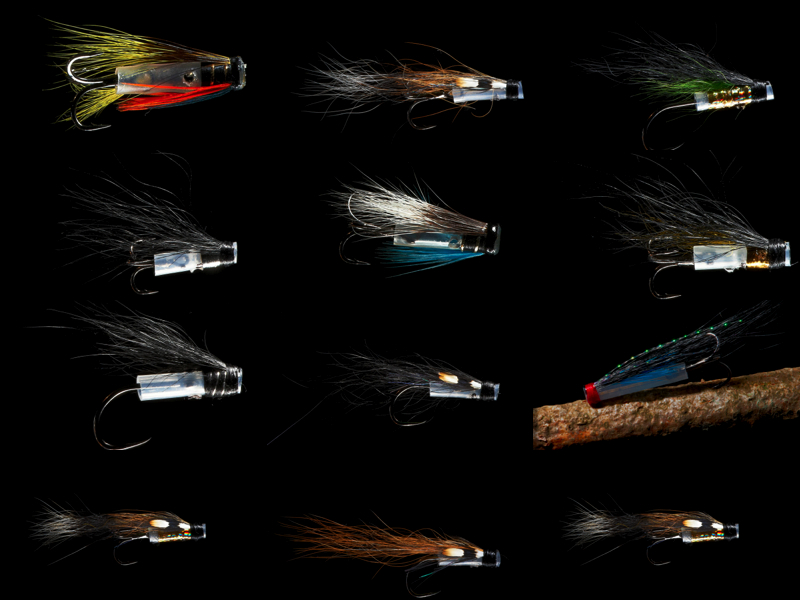
See the large selection of Riffling Hitch flies we have in our online-shop
What anglers wrote us
Six 20 lb salmon on the dry fly
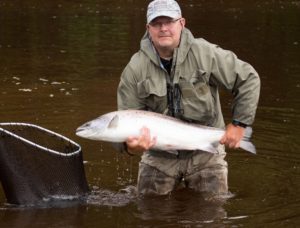
Our late pro fly tier Mr Kim Nyborg was in Newfoundland for the second time and got everything right in the summer of 2015 – with six salmon in the 20 lb range, with this giant estimated at + 30 lb as the biggest – Many of these fish were caught on the Monster Tube… Read more “Six 20 lb salmon on the dry fly”
+ 30 lb. salmon caught on High VIZ. Green Tube Bomber
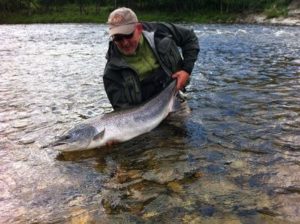
Norwegian fly fisherman Mr Jan Harry Åsen caught this wonderful + 14 kilo (+ 30 lb.) Atlantic salmon on one of our Big Tube Bombers. Jan Harry wrote us: “Fish jumped right out of the water to grab the big Bright Green Tube Bomber …from above” The salmon was caught in the fantastic Lakselv River… Read more “+ 30 lb. salmon caught on High VIZ. Green Tube Bomber”
Mr. Chad Black – Steelhead guide and head manager
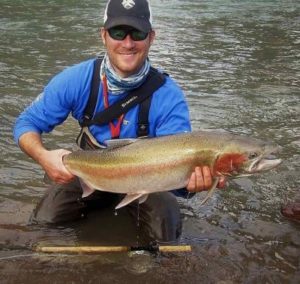
We’ve done so well on your flies over the years, and they skate so well that we don’t need to fish anything else when it comes to wake… Read more “Mr. Chad Black – Steelhead guide and head manager”
Fraser Heston
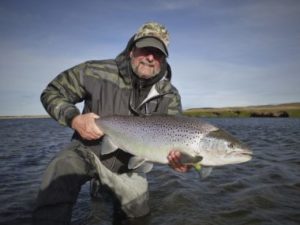
These sea-run brown trout are most often caught with a small nymph, a scud pattern in size 14 or even 16 (try landing a 20 pounder on a size 16 nymph hook!). But they will also come to swung flies (like Collie Dogs or Sunray Shadows) or even skaters. The guides thought your Fish Madman… Read more “Fraser Heston”
Angler Mr. Thomas Lykke with super dry fly salmon
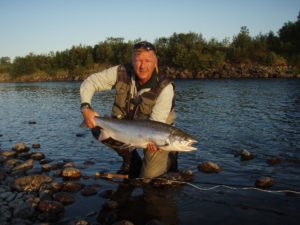
Summer of 2010 Angler Mr Thomas Lykke with a beautiful bright summer fish caught on a Tube Bomber… Read more “Angler Mr. Thomas Lykke with super dry fly salmon”
Bill (Beatle) Abshagen
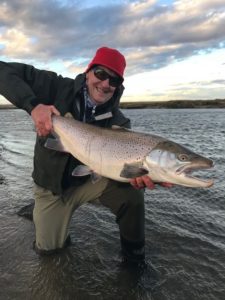
Here is a picture of a Sea Run caught on one of the Sun-Rays you sent me for my trip to Despedida Lodge in Tierra del Fuego Argentina a few weeks ago.—Fish were actually eating small Skuds (14 & 16’s), but this fish was hungry, and couldn’t resist an appetizing smaller Sun-Ray. I’m looking forward… Read more “Bill (Beatle) Abshagen”
Mr. Keith Chaulk, Newfoundland
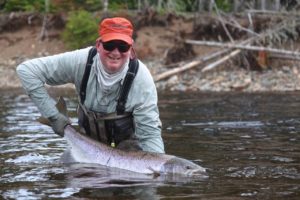
The quality of workmanship and materials used in creating a musical instrument will have a limiting effect on a musician performing potential. I feel the same about the equipment and flies I use when trying to make a receptive audience of the stubbornly critical Atlantic salmon. The tubed dry flies I received from Fishmadman allow… Read more “Mr. Keith Chaulk, Newfoundland”
43 inches Atlantic salmon on Monster Tube Caddis
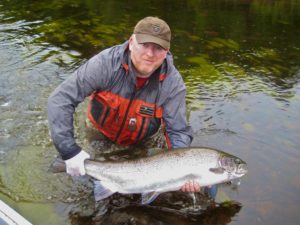
Hi! Per and Jesper! Many thanks for the set of Monster Tube Caddis received from you last spring. The salmon of several rivers in Gaspésie was quite impressed with The Monster! In early July 2015, Jane — my wife — and I fished the upper Cascapedia River in the Chic Choc mountains, where our pool… Read more “43 inches Atlantic salmon on Monster Tube Caddis”
Mr. Terry Byrne, NFLD, Canada
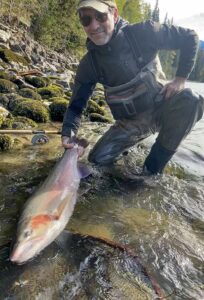
I can tell you this fly and other tube dry flies will definitely be in my arsenal from this point on! Several times I hooked and landed large Atlantic salmon on their creations when my traditional flies and Bombers had no effect on the salmon. The Atlantic Salmon world is continually changing with new gear and techniques, Don’t miss… Read more “Mr. Terry Byrne, NFLD, Canada”
Stevie Morrow Lodge manager. Copper Bay Lodge
We see more and more of your amazing flies every year, and I just love the way they fish. Thanks again! Steve Morrow Mr. Stevie Morrow Lodge, manager. Copper Bay Lodge / Professional steelhead guide Babine Steelhead Lodge FRONTIER FAR WEST Copper Bay Lodge BULKLEY BASECAMP Also below a pic of your fly in an… Read more “Stevie Morrow Lodge manager. Copper Bay Lodge”
Mr. Håvard Vistnes from Kongsfjord elv
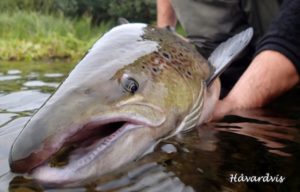
Salmon season 2013 at the Kongsfjord River Just in time for the start of season 2013, I received my selection of tube dry-flies from you – They were tied perfectly and float great – I have had tremendous success with light-coloured Bombers and the Monster Tube Caddis. During the season, I often witnessed how salmon… Read more “Mr. Håvard Vistnes from Kongsfjord elv”
Mr. Paul Rogers, NFLD Canada
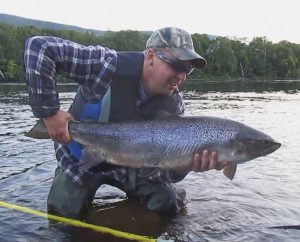
Hi Fishmadman, Photo of a 44 inch Atlantic hooked on a Black Bomber tube fly in August 2017 on the Lower Humber River, Newfoundland. After chasing the fish over 500 yards down river from where it was hooked, she was promptly released and swam away very strong. I have to thank my good friend and… Read more “Mr. Paul Rogers, NFLD Canada”
Mr. Joakim Haugen, Northern Norway
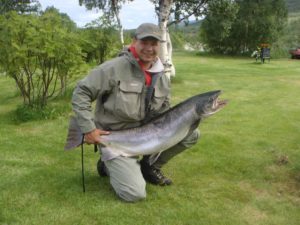
The first fly I tried was the smaller of the Monster Tube Caddis. After just a few casts with this fly a huge fish came for the fly but missed. I did two more casts before it re-appeared – This time it got hooked. Salmon weighed 17.1 kg (37.7 lb.) and is the biggest salmon… Read more “Mr. Joakim Haugen, Northern Norway”
Mr. Bill Bryden, NFLD Canada
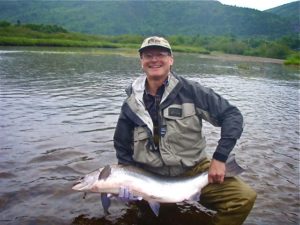
Hi Jesper & Per Here is a photo of a 40 inch by 21 inch Atlantic salmon we landed on one of your Monster caddis tube flies the last week. You can see the fly hanging from the fish’s mouth (barely). I’ve hunted large salmon for 20 years throughout Newfoundland and Labrador and that fly moves them unlike… Read more “Mr. Bill Bryden, NFLD Canada”
