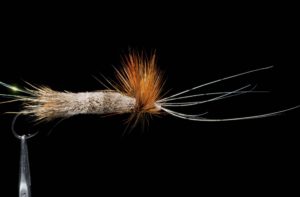
The Caddisfly
The caddisfly insect is a cornerstone in fly fishing, and it plays an essential part in the life of salmon and trout. From early spring to late in the season, juvenile salmon and trout will meet the caddisfly insect in its many forms and shapes – Adult salmon and trout will also meet the caddisfly throughout its life in the river system and during the period of caddisfly hatching flies that resembles the caddisfly in shape, colour and behaviour can become top choice the fly box. Sometimes it could be a dry fly like our Monster Tube Caddis ™, a small hitched fly like the V-FLY ™, or a classic wet fly like the Blue Charm that, with its dull dark appearance, becomes much more efficient in some Nordic rivers during August when caddisfly hatching is in progress.
Here we have gathered some images of the big Caddisfly found in so many clear rivers in northern Norway.
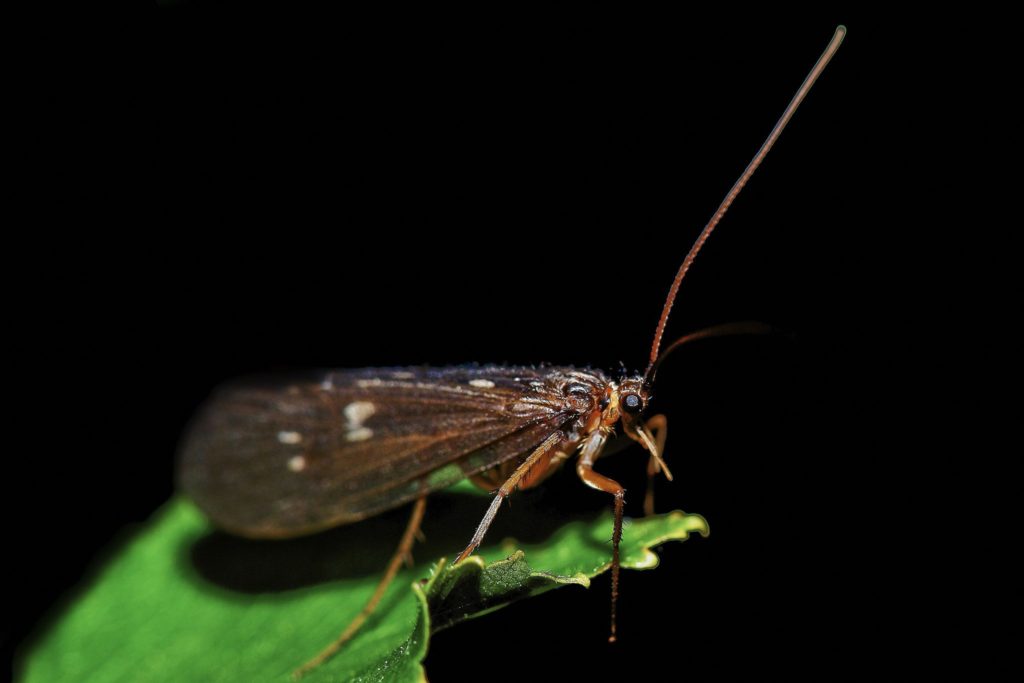 Fully cured giant Nordic Caddisfly insect more than 17 millimetres big (not including the antennas) ↑ The adult caddisflies only live for a short period, usually 1–2 weeks.
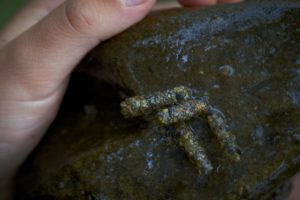
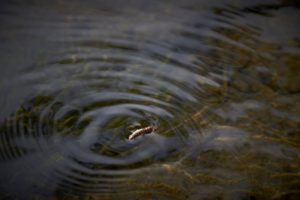
The caddisfly larva, now called: Pupa of caddisfly, has left the building – moving fast to get to the safer ground on land – where it can begin its final fantastic transformation into an adult insect.
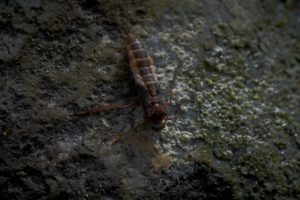 Caddis pupa safe from the water – waiting for its last transformation into a fully grown insect
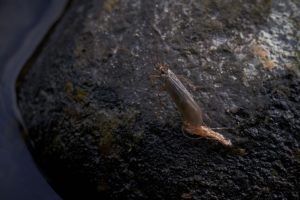 The adult insect climbs out of its last skin (The pupal skin). The insect is still soft, and the colour is lighter than when the wings are fully cured.
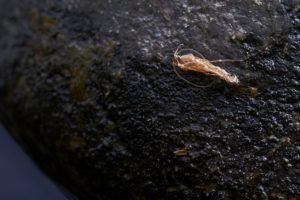 The insect has left for the nearby trees to dry up and find shelter – The casing or pupal skin left behind on the rock – These casings can also become food sours for trout and salmon parr that will intercept these shed skins.
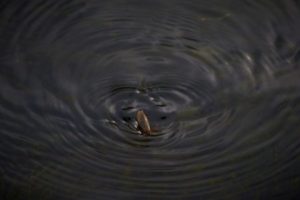 The newly hatched caddisfly made it to dry land with fast and erratic movements – A dangerous moment in the life of the caddisfly insect.