
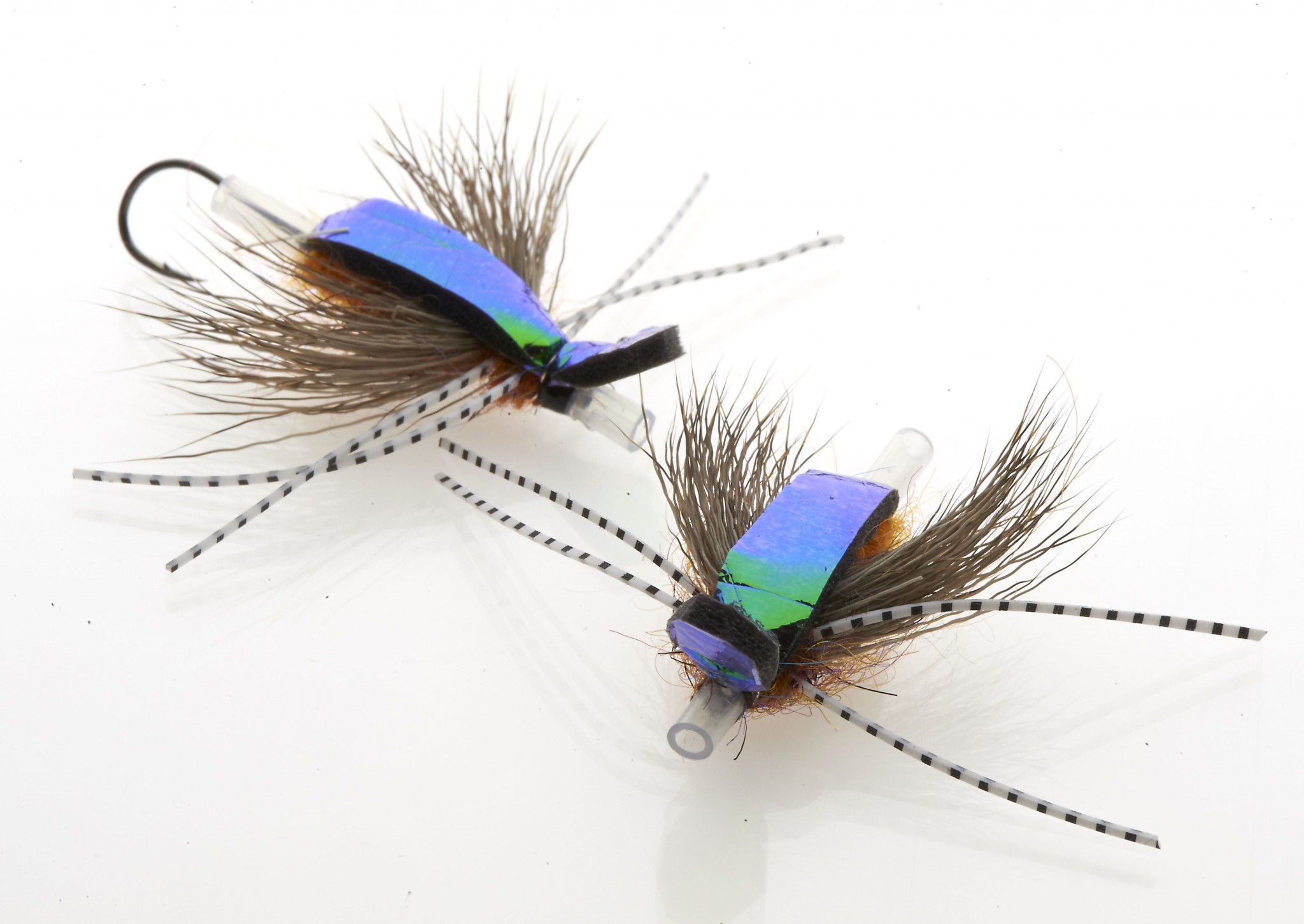

What is a tube fly?
The tube fly was originally a salmon fly design by The Scotsman Mr Alexander Wanless, who shaped a line of flies on thin lead barrels in the late 1930s.
Mr Alexander Wanless aimed to make a lightweight bait he could fish on his spinning rod with a fixed spool reel. Still today, many anglers use the tube fly on a spinning rod, but more so, the tube fly has become one of the most popular ways of tying salmon and steelhead flies –
In the Swedish Lagan River, many salmon are caught on tube flies. Either on fly gear or, more commonly, on spinning gear. When spinning gear is used, the tube fly is fished close to the bottom on a swinging trace behind a weight.
Tubes for tube fly
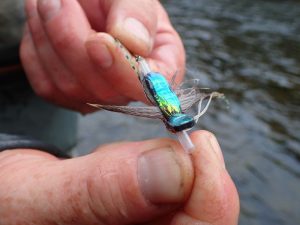 In all its simplicity, the tube is merely the vessel that carries the fly pattern; hair, feather, and hook – But the tube with its ways in the water is also an alluring factor in the tube fly pattern, which can be used progressively.
Right; The FlashBack Bug is a steelhead wake-tube fly designed to use the tube’s properties to stay on top of the surface. The fly could also be tied on a hook… but it will be a fly that works differently on the surface than its cousin tied on the tube.
Tube fly patterns – in the future
We believe that tube flies will be the future fly when anglers grasp the many potentials of the various tubes.
Big rodent flies like this Tube Rat from our shop benefit significantly from being tied on a tube versus a hook. The tube rat is a much lighter alternative that is easy to cast even on light gear. The tube fly is not rigid as a big long shank hook, and less fish is lost to problems with leverage
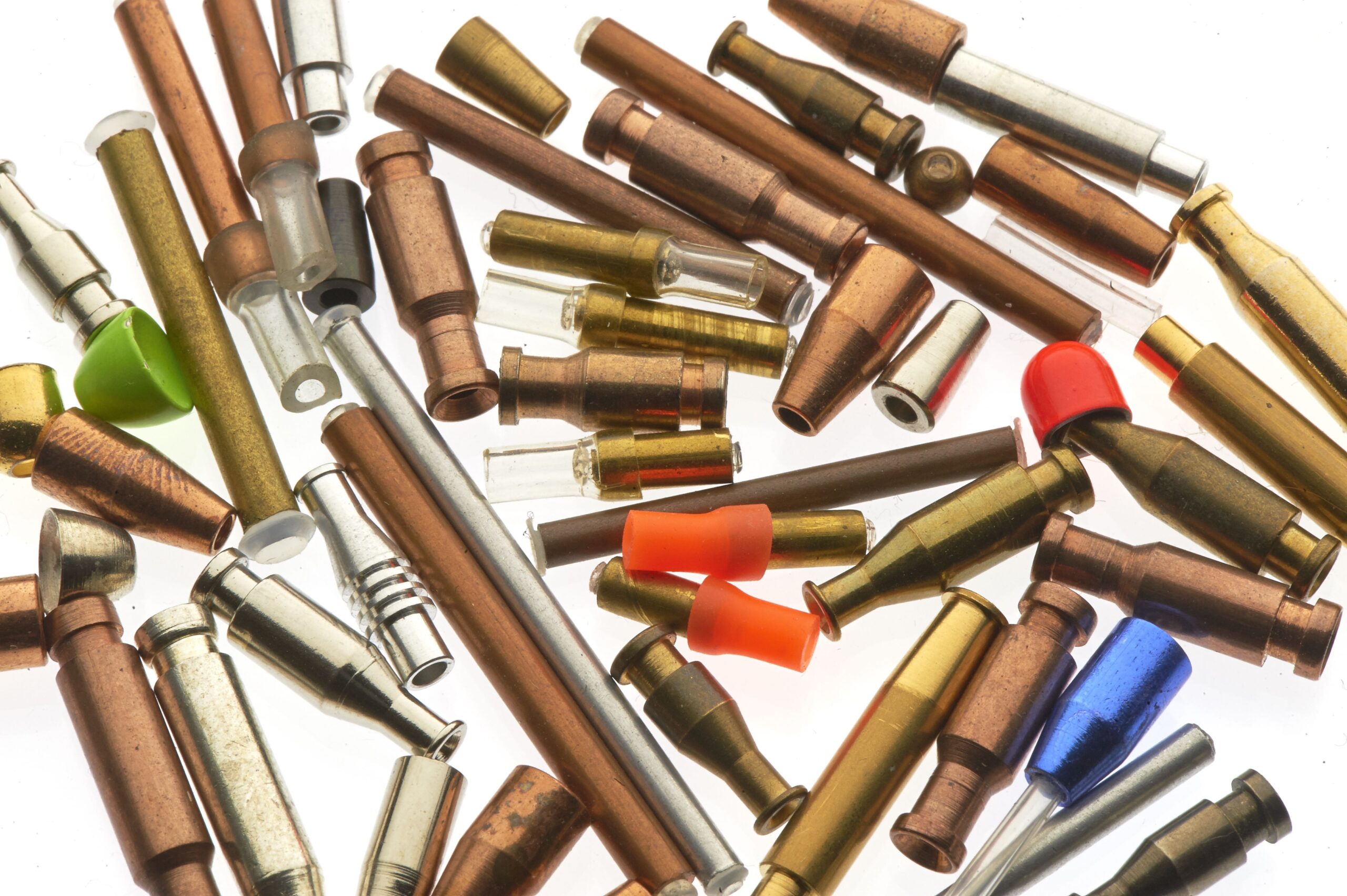
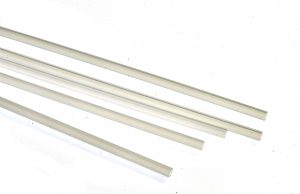
Tube designed for tube flies
Tube fly-tying equipment is a unique part of the fly-tying kit, and fishing shops here in Europa often carry a large selection of tubes and other specialized equipment for tube flies.
The majority of these tubes are made from plastic substances called PE: Polyethylene or PA Aliphatic polyamides
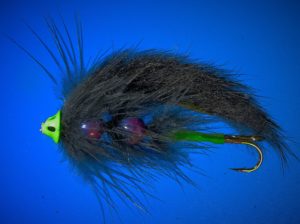 With an annual worldwide usage of approximately 80 million tons of Polyethylene; it is not uncommon to find tubes in fishing tackle shops that may have been designed for something completely different from tube flies. Likewise, you may spot some tubes outside fishing shops that could work well in your fly tying.
Right: An 2 1/2 inch Danish seatrout commotion tube fly for nocturnal fishing. Dressed with a soft cone to the front and plastic beads to the body to make it push water
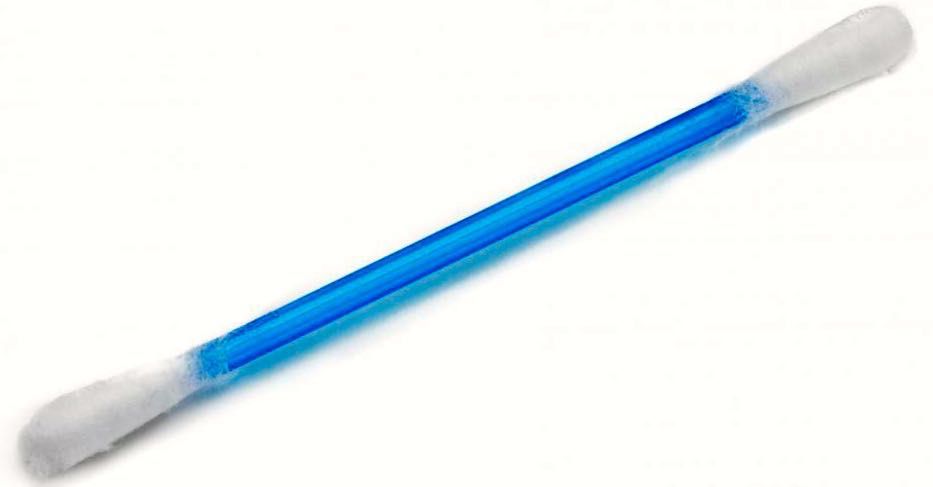
The cotton swab is a good example of a tube that could work as tubing for tube flies. On the other hand, cotton swabs are just as diverse as the tube-fly tubing you find in shops – and some cotton swabs will easily split and bend, others might float – an exclusive feature you could use for an extraordinary tube fly.
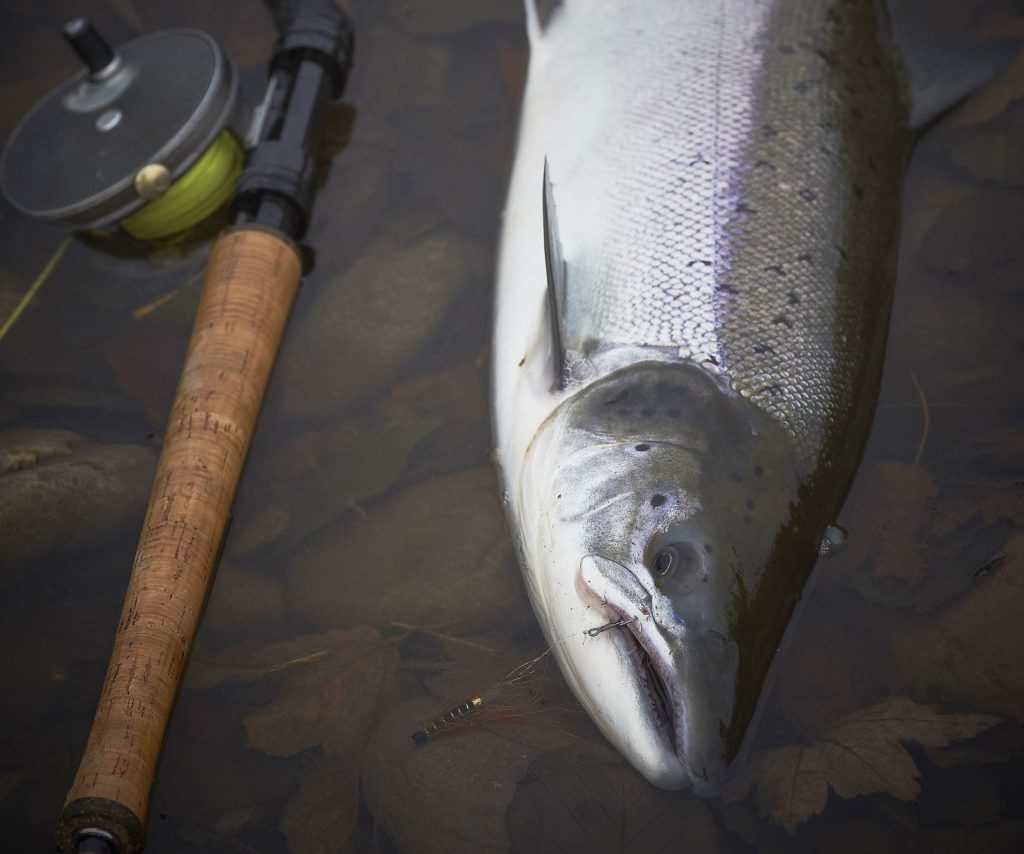
The right tube for the job
Fishing an entire season for Atlantic salmon or steelhead could be a technically demanding affair involving a lot of know-how and special gear.
Here a salmon caught on a Garry tied on a 1 1/2 copper tube – When fishing – the hook is kept in place by a hook guard made of soft plastic tubing tied to the rear of the copper tube. The tube fly will slide freely on the leader when a fish is hooked.
The good, the bad and the ugly tubes
It is unusual that manufactures of tubing write any detail on their product so you often have to do your own technical research to get the right material for your tube flies
Here is a few things to look (out) for
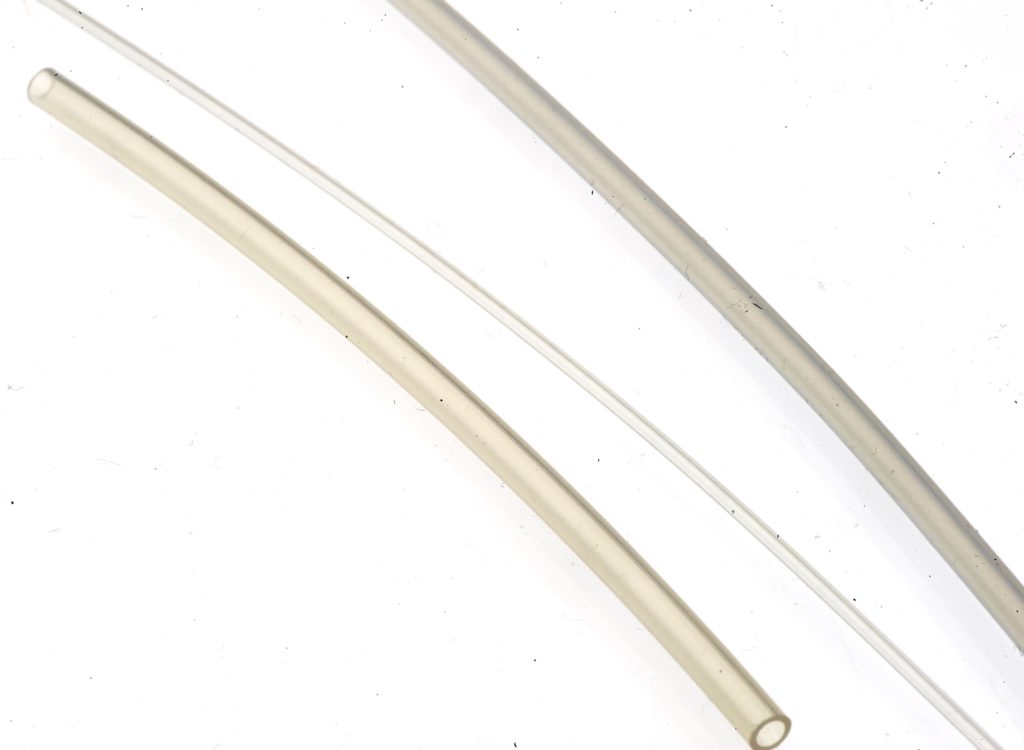
Buy a straight tube for big flies.
Tubing is often kept on giant spools and sold by the kilo – then to be cut up into lengths and resold to anglers. The tubing may keep some of its carvings from its shelf-life – leaving you with slightly bend tubes. As far as we’re concerned, that is a no-no when you’re looking to find tubes to tie long flies on, and we would avoid buying such material as it could give you a bad starting point for your flies – and curved flies could end up twisting your leader
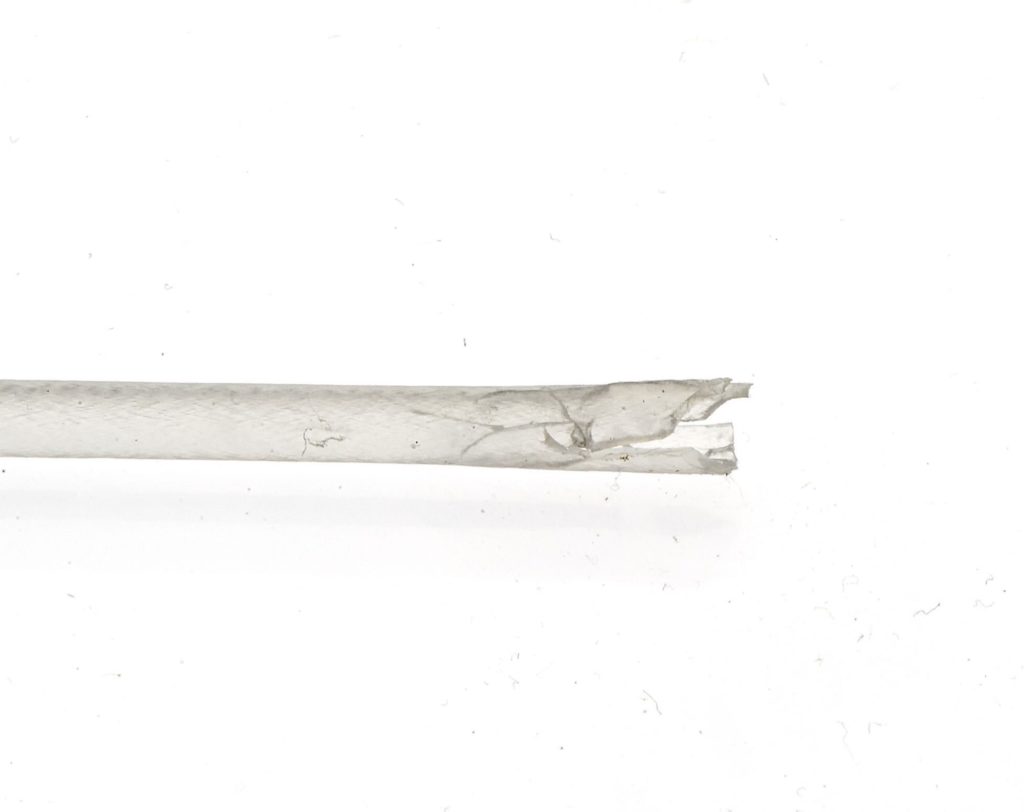
Some tubes crack in cold weather.
Tube flies could easily be the fly you turn to when the weather conditions are at their worst and dropping temperatures – strong currents and heavy leaders obviously will take their toll on your tube flies.
It would be best if you tied your flies on tubing that can withstand temperature changes and mechanical wear – but you may have to compromise as some rigid tubes may crack in cold weather.
Above left: A tube sold as; a tube for Scandinavian tube fly – left in the freezer for 5 minutes – I then tried to insert a hook with this cracking result.
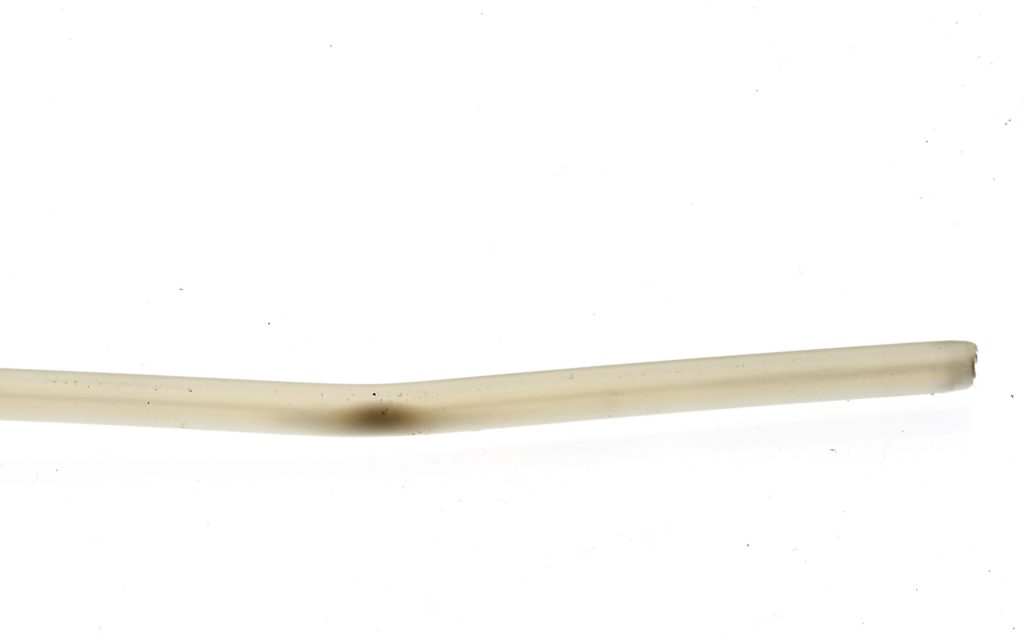
High memory tubes
Avoid tubes that change colour when you bend them – The colour change will tell you that the tube has high memory and properly has difficulty falling back into place after being bent for instance, in the mouth of a fish
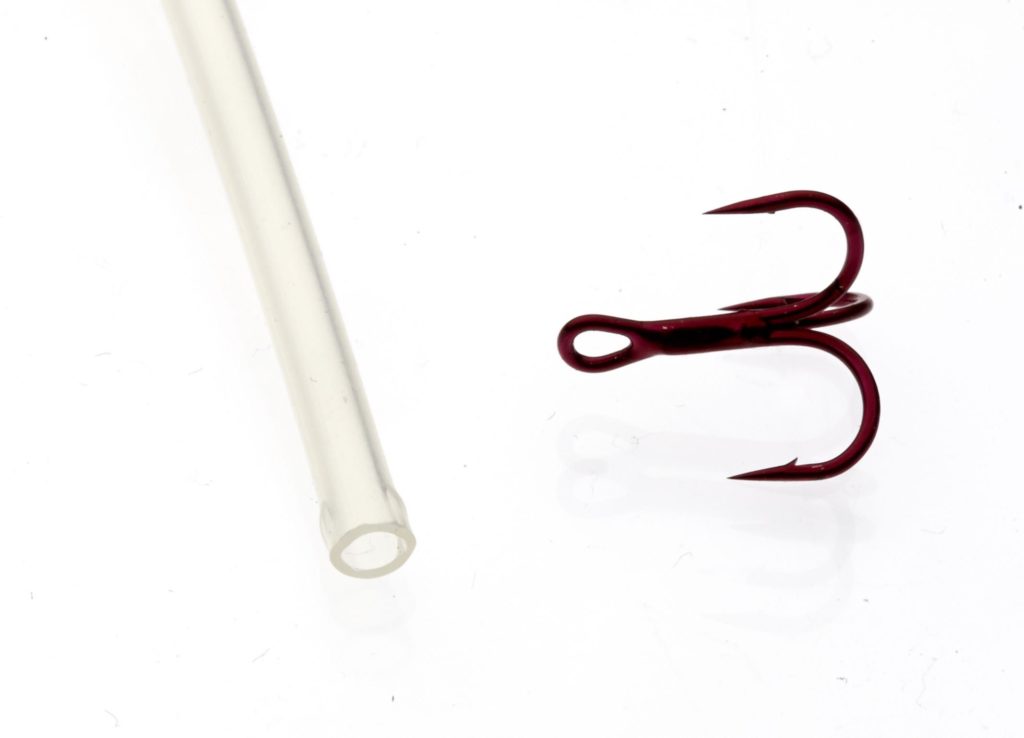
Too hard tube – to put hooks into
If you rely on putting the hook inside the tube… avoid buying too rigid tubing as this could result in troublesome positioning or repositioning of the hook as the material might not accommodate the hook – Some hard tubes may also split when under pressure and used in cold water (2 – 5 degrees Celsius – 35 – 41 degrees Fahrenheit) –
As a general rule, you can check if your tube is suitable to be used as a place to put your hook – by squeezing the tube firmly between your thumb and index fingers – If you can ovalize the tube slightly…and then have it fall back into its original round shape then` you could have the right tube for the job.
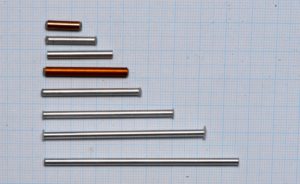
Heavy tube flies
Weighted tubes can get down in fast water – They can also be used during the cold part of the season, October – November, and during the first month of the season – January – March.
Above right: Classical Slipstream tubes from Veniard in England – The tubing inside the metal tube (inner tube) may be frayed or otherwise damaged when used – You can change the inner tube by cutting the ends of – then pulling the inner tube out – then inserting a new piece of inner-tubing – You can use our 1.8-millimetre tubing for this job.
Tube flies are an English invention designed by Mr Alexander Wanless in the early 1930s. It soon became a popular way of doing flies –
 Some of the first tube flies made by Alexander Wanless were tied on oblong lead barrels. Mr Wanless used the flies with small hooks on his light spinning gear.
Still today, the heavy sinking tube plays a role in fly fishing; mainly, Atlantic salmon anglers use weighted tubes during the season.
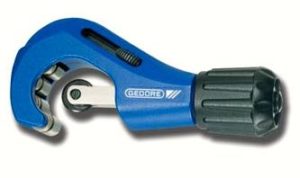
Left: Special tool for cutting thin diameter tube
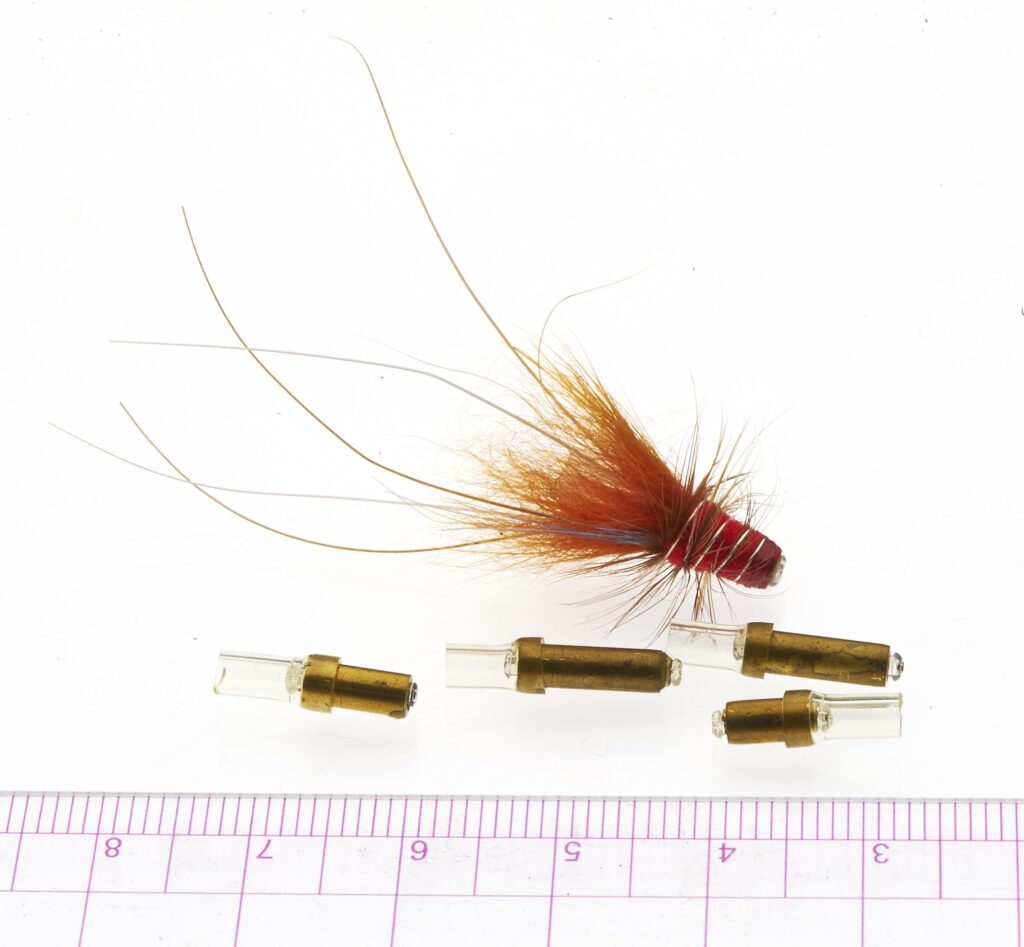
Not possible to buy tiny brass tubes? Cut your own! – I have cut a big brass tube into several small heavy microtubes using a unique tube-cutting tool. In the background, a tiny Frances Fly tied on such a micro brass tube. Tubes fitted with our hook-guard
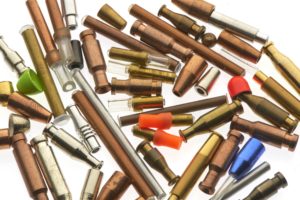
Heavy tube flies in many shapes and sizes.
Scandinavia and Scotland are blessed with fast-running rivers. European anglers have developed a long line of heavy tubes to be used during the season – most of them are designed for summer sport with a floating line and a presentation of the fly some 10 inches below. Many of these microtubes and the conehead on the photo to the right are designed for this purpose…
We aim to present the individual tubes from the photo on this page – during the following year.
See another page on Fishmadman where we use copper tubes for fast water tube flies
 Tungsten Tubes – The heavy boy in the class
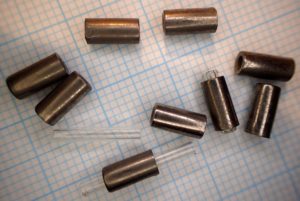
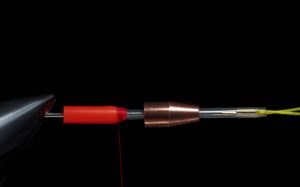
Weight is not everything when it comes to surging to the deep – density is an all-important factor – Tubes made of the material tungsten has a density almost 200 % higher than an equivalent copper tube – A real depth charge
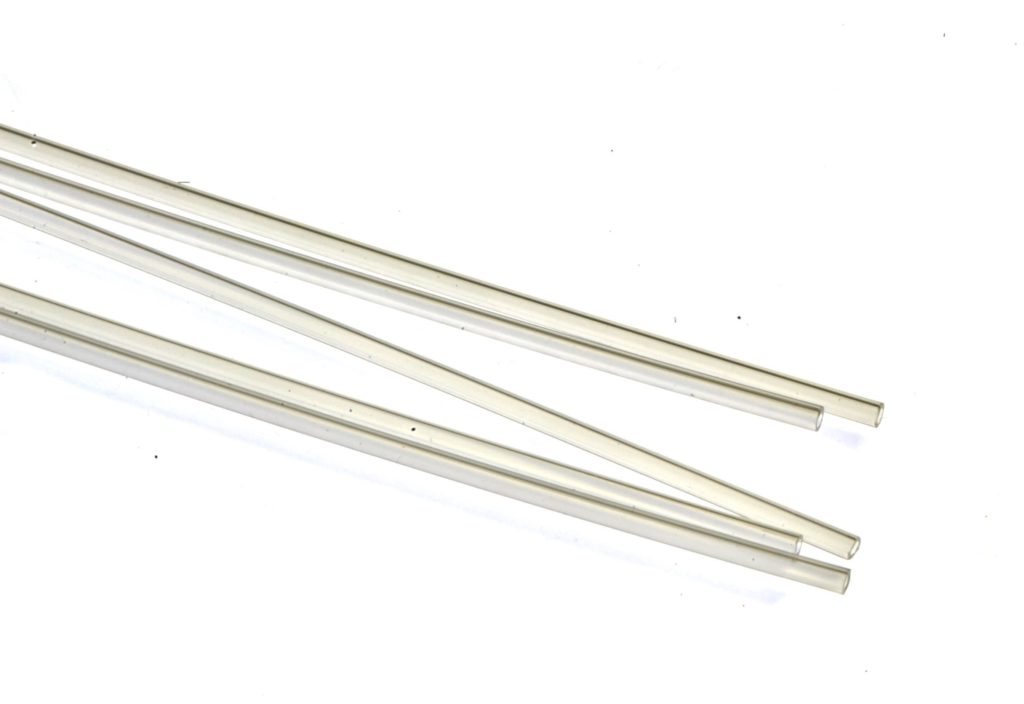
Light tube fly
Most Scandinavians would choose tube flies for their salmon and trout fishing. The tube fly is convenient and gives us versatility that is hard to beat – But foremost, the tube fly allows the angler to fish big or small fly patterns correctly in all kinds of water.
Tying a tube fly for summer conditions
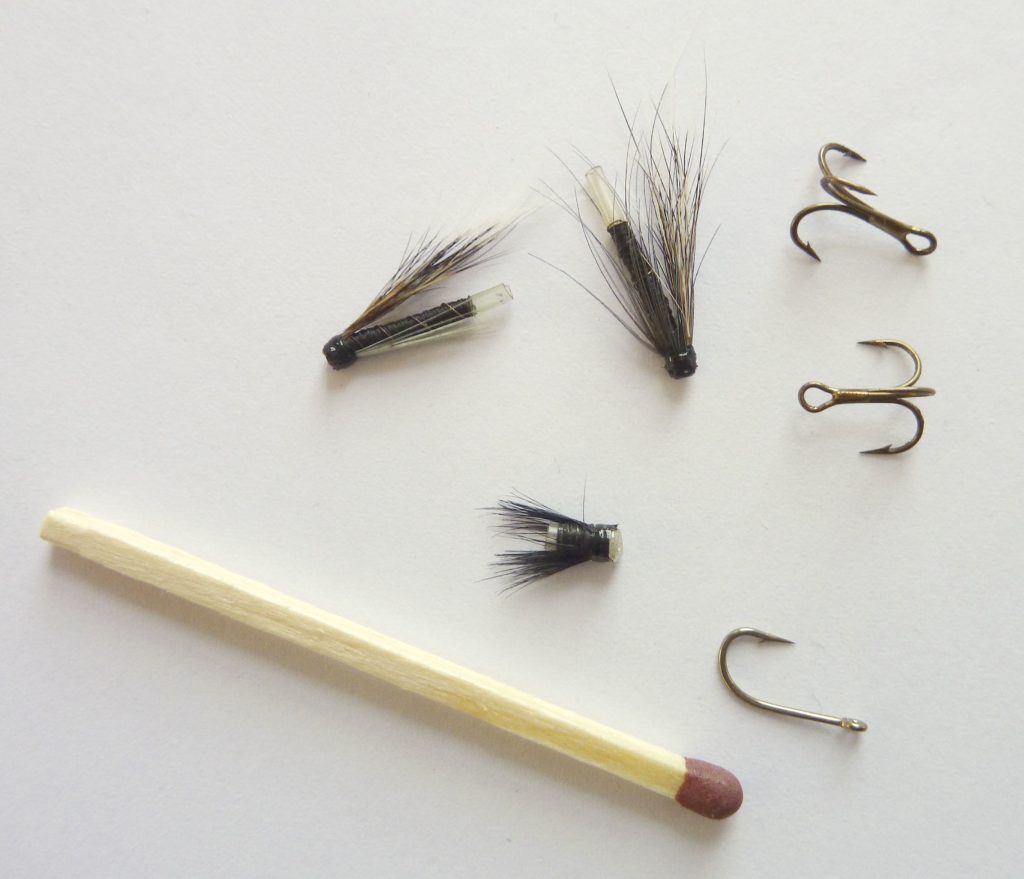
When summer conditions call upon a tiny fly pattern that will work with the most subtle current in the river – you should tie on a micro-tube fly – The fly may be more prominent in volume than a small single-hook pattern and fitted with a hook. It could also weigh more than a single hook pattern – But it also acts much differently.
Left three miniature tube flies tied on different tubing – The two top patterns are tied on relatively soft tubing from a BIC ballpoint pen – hooks in the picture is # 18 – a single hook is # 14
Tubes for Riffling Hitch flies
The best tube on the market
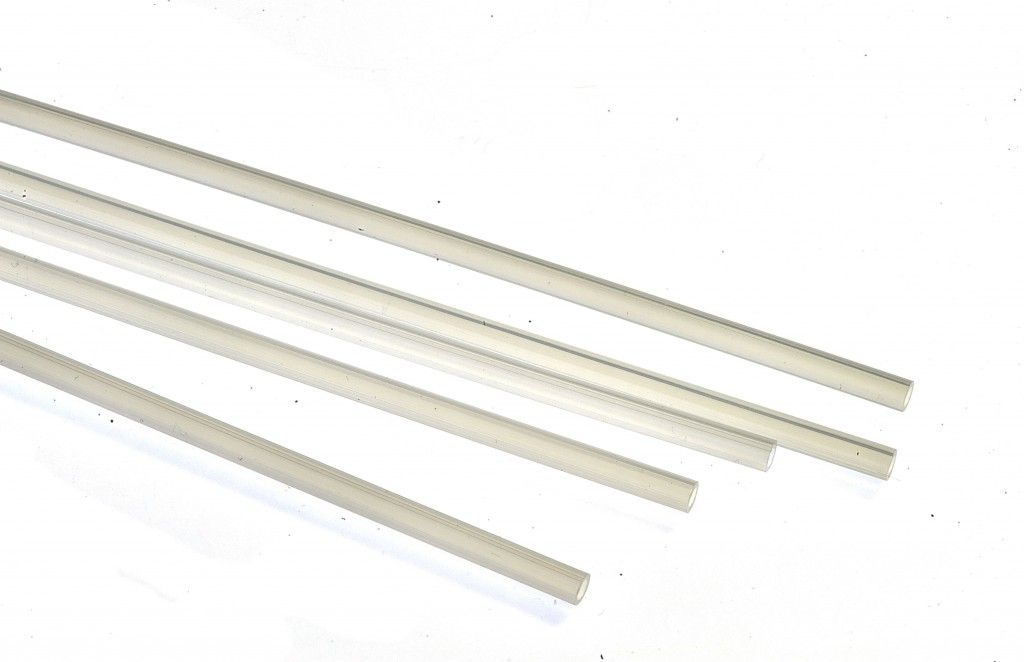
A Fishmadman speciality is our tubes designed for Riffling hitch and wake flies – No one made a good enough tube for the job …so we designed the perfect tube for this purpose. The tube has low memory and will take a lot of mechanical abuse before it breaks. Buy this tube from our shop 
How we make our wake flies on Riffling Hitch tube
[cq_vc_hotspot image=”14262″ position=”58.514285714285705%|16.470588235294116%,54.22228571428571%|58.82352941176471%,34.885714285714286%|39.411764705882355%,10.59047619047619%|58.6764705882353%,” iconbackground=”rgba(110,252,78,0.8)” circlecolor=”#ff0000″ pulsecolor=”pulse-red” custom_links_target=”_blank”][hotspotitem]Our very flexible Riffling Hitch tube will hold various types of hooks
[/hotspotitem] [hotspotitem]The leader goes into a hole in the belly of the fly – forcing the fly to track on the surface – It will wake effortlessly in both fast and slow water.
[/hotspotitem] [hotspotitem]You don’t need buoyant material in your fly design – the riffling hitch system will keep the fly on top…
[/hotspotitem] [hotspotitem]See our page on steelhead wake flies
[/hotspotitem][/cq_vc_hotspot]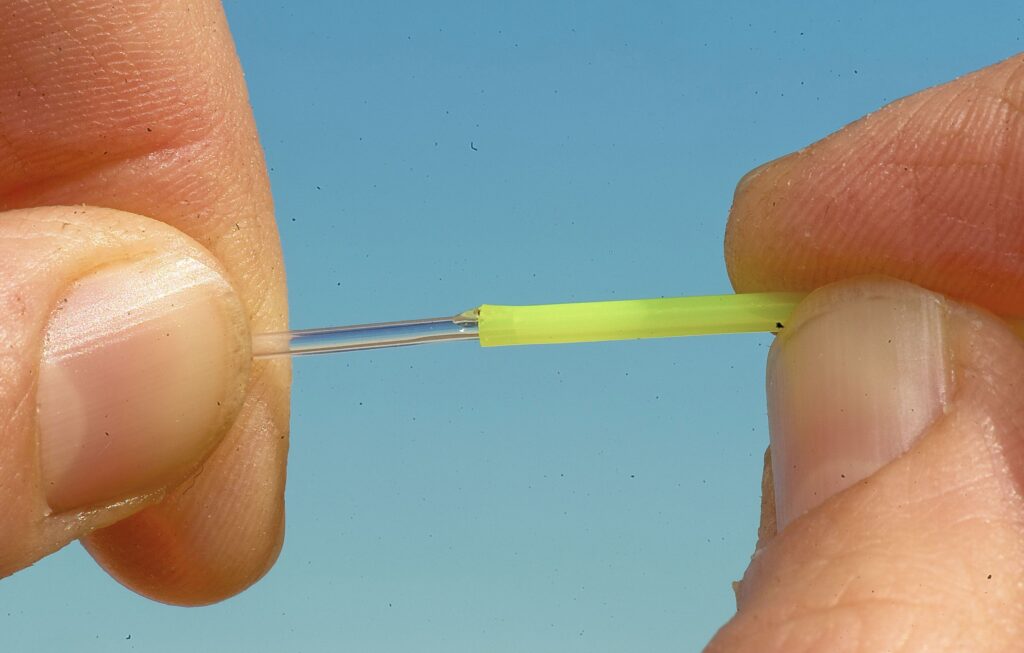
Tying a tube fly – Hook guard solutions
The hook guard or hook rest is the extension of the tube that will enable you to hold the hook in place when you cast or fish the fly. Is it not an absolute for all tube flies, and different groups of anglers may have personal opinions and ideas about the use and necessity of this add-on?
I value the hook guard and implement it on many of the tube flies we do in Fishmadman – merely because it is a foolproof solution that reduces the chance of a tangle.
Above left: A soft tubing glued to a thin hard tube with UV glue. A neat way to fixate a hook guard to a tiny tube fly.[hr]
Loose or fixed hook-guard?
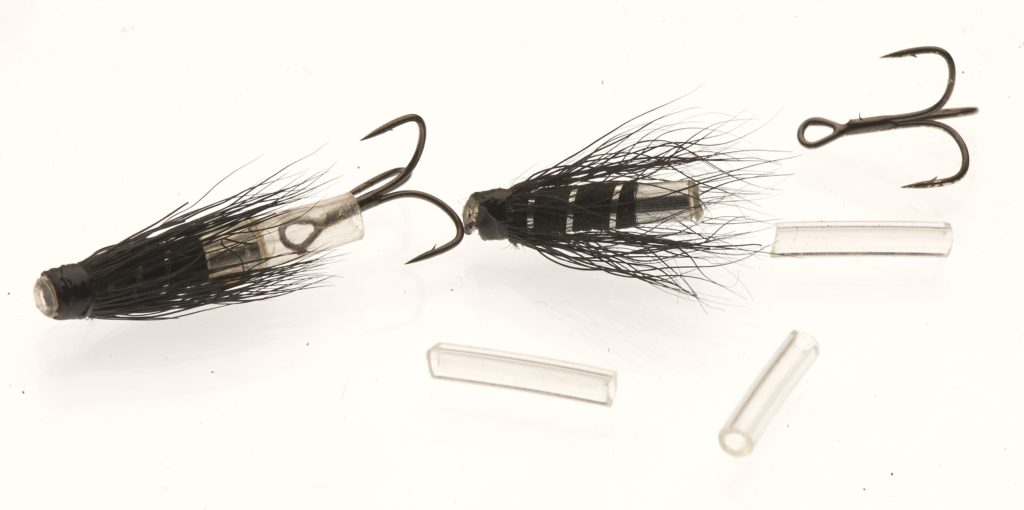
Some anglers keep the hook guard loose in their fly box and attach it when they want to use the fly – The lower part of the tube fly is free of material, so the hook guard can easily be slipped on. The apparent advantage of this solution is the option to change the hook guard if it becomes damaged. I think it works neatly on smaller flies like these Stoat Tail tied on # 1/2 aluminium tubes from Veniard
Our 2,2/ 1,2 hook guard is perfect for smaller flies like these.
Swinging hook-guard
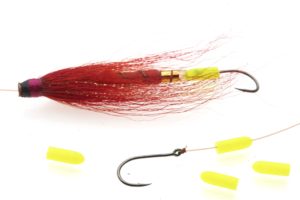
Anglers in Scandinavia also use this smart kit to keep their hook swinging behind the tube – opposed to setting the hook into a more rigid hook-guard – Here from German Propeller Fly – This version will hold hooks from # 8 – 12
Tie-down of hook guard.
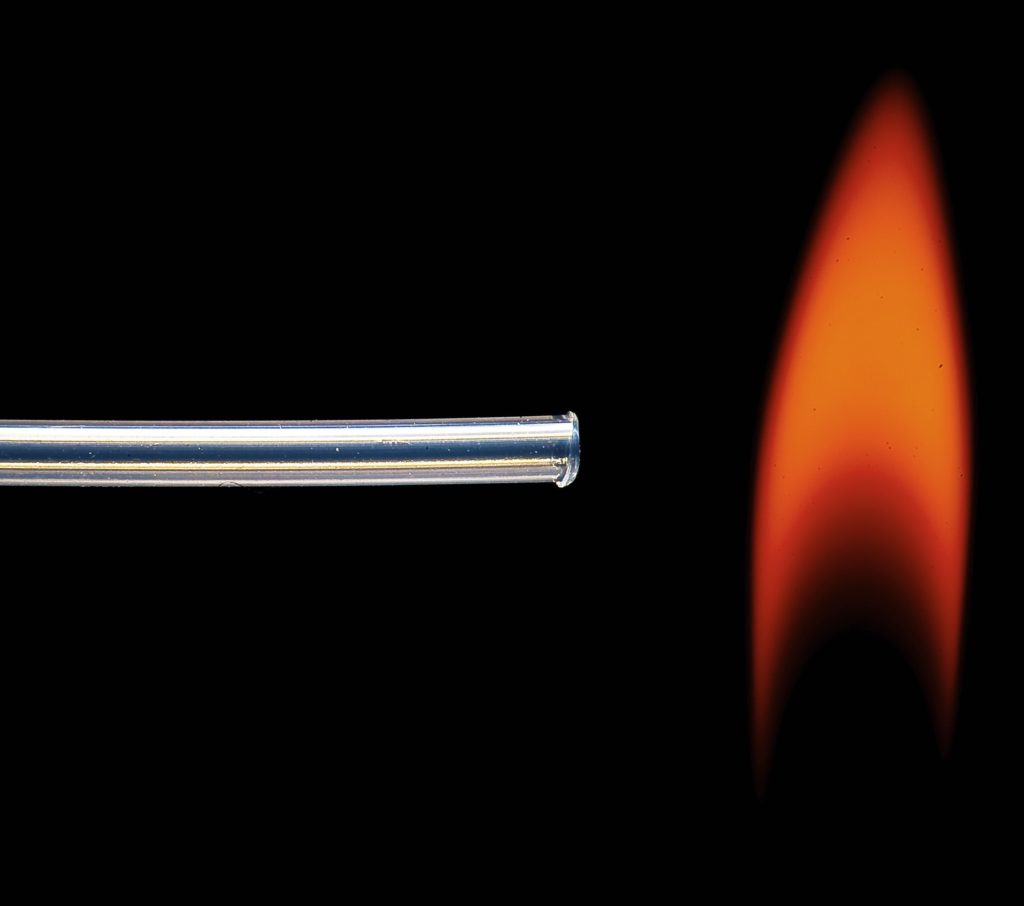
If you tie dry flies on tube as we do – we recommend using a hook guard on your fly pattern – the fixated hook will decrease tangle. Initially, you need to make a collar on the tubing, as seen from the photo to the left – You do so by getting the tube near a naked flame – If you use quality PA tubing, the tubing will melt quickly to form a perfect small collar.
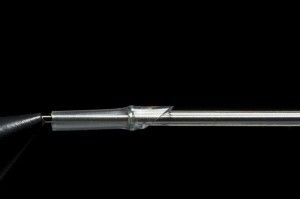
Cut the hook guard at a square angle
Here I have started on a bigger fly on our 1.8 mm. hard tube – I have slipped our bigger 3.0/1.8 mm hook guard on – But I have cut the hook guard at a square 45-degree angle – By doing so, I can reduce the size of the tie-down needed to secure this hook guard.
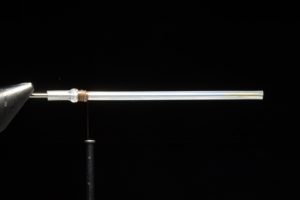
Right: I have slid the 2.2/1.2 hook guard onto my 1.4 hard tube. You can see the collar beneath the hook guard – Tie the end of the hook guard and secure it with super-glue or lacquer.
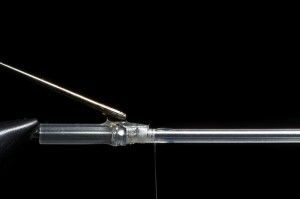
Finish of with super-glue or lacquer
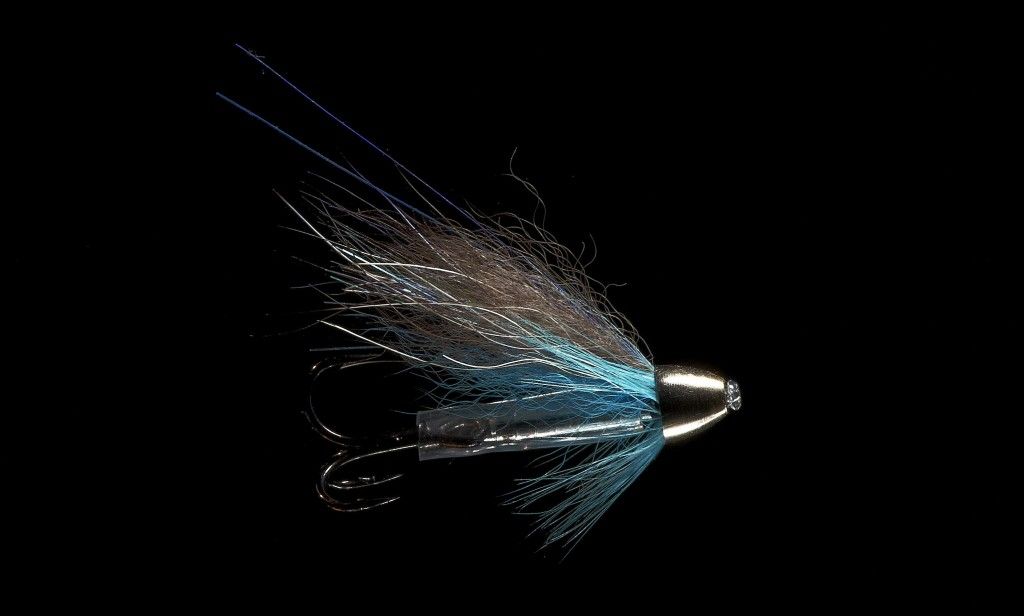
The hook guard works as an integrated part of the body
One fly I have used repeatedly over the years is this 1/5 # (0.5 cm.) micro-conehead tube fly – I tie it in all kinds of colours and patterns, and it is just such a neat fly to tie and use. It may look intricate, but it is a very easy fly to tie. I think some of this micro tube fly´s success is down to the fact that it has a semi-see-through body that is accomplished by running the hook guard onto the body of the fly – Check this super fly out on our page dedicated to the. Kinaber Killer
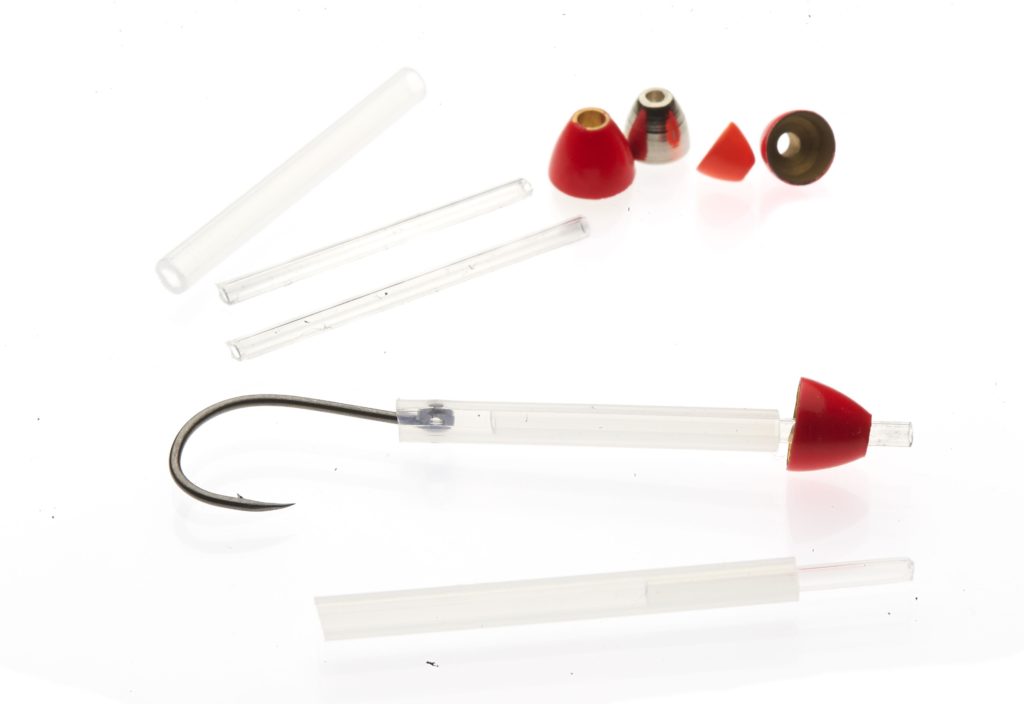
Building the tube fly
Modern tube flies in Scandinavia are often built from various sections of tube – and getting dimensions and tubing right is a bit like building LEGO.
Here I have assembled our 1.8 mm. hard tube with our 3.0/1.8 mm Riffling Hitch tube – In this case, the riffling hitch tube is used as a hook guard, but a hook guard of soft tubing may also be slid onto the rear of the riffling hitch tube to accommodate bigger hooks than the Owner Chinu # 1/0 shown in the photo. Coneheads are often used to the front of the fly – fixed with a tiny drop of glue or Zap-A-Gap – Finally, a collar is formed on the tube by heating it with a naked flame.

Specially designed tube fly-tying needles.
Over the years, we have happily used regular sowing needles for our tube fly tying – we have also promoted this inexpensive solution through our shop. Still, we have had a problem getting suitable sowing needles for the tubing we sell, so we decided to produce our design of tube fly-tying needles.
Four different needles to choose from
We made needles that would fit the tubing we sell – from the thinnest 1.4-millimetre tubings to the biggest 3.2 mm. tubing we use for big Sunray Shadow flies.
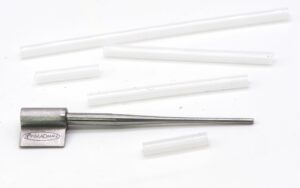
THE RIFFLING HITCH NEEDLE
A specially made needle for short tube flies as riffling hitch flies – bottle tubes.
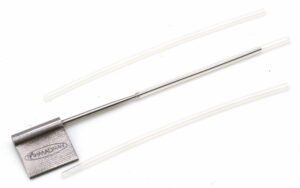
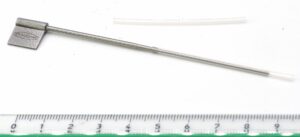
THE THIN NEEDLE
For tiny tube flies or metal tubes with inner-lining tubing – Micro Bottle tubes.
Made for our thinnest 1.4 mm. tube with an inside diameter (Ø) of 0.7 mm. The total length is 62 mm.
THE MEDIUM NEEDLE
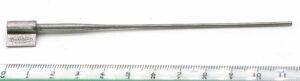
For small/medium tube flies or metal tubes with inner-lining tubing – Bottle tubes.
Made for our 1.8 mm. tube with an inside diameter (Ø) of 1.1 mm. The total length is 97 mm.
THE SUNRAY SHADOW NEEDLE
A specially made needle for long tube flies as Sunray Shadow flies
Made for our 3.2 mm. Hitch tube inside diameter (Ø) of 1.8 & 2.0 mm. The total length is 115 mm.
Tube fly-tying supplies
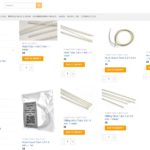
Fishmadman has tubes made especially for Nontoxic, PVC-free tube flies with all the right abilities. As we cut out the middlemen, tubes are inexpensive, and you get the best product, you can find on the market.
All tubes are made in Denmark.