
 A very special caddisfly imitation
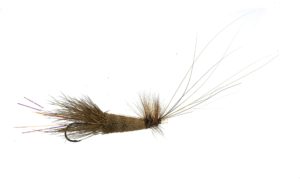 A very special caddisfly imitation
Monster Tube Caddis ™, with its vibrant appearance, has a strong effect on Atlantic salmon across the Northern Hemisphere. Especially large multi-sea winter salmon seem attracted to this fly in both big and smaller versions. We have had many anglers test-fishing this fly in various shades of brown – and have found that the light brown version works best – We use Coch-Y-Bonddu feathers in light brown or ginger.
It is not necessary to match the hatch in all aspects. This Monster Tube Caddis ™ is more a caricature than an imitation of the limnephilidae caddisfly that it is meant to portrait Go shopping

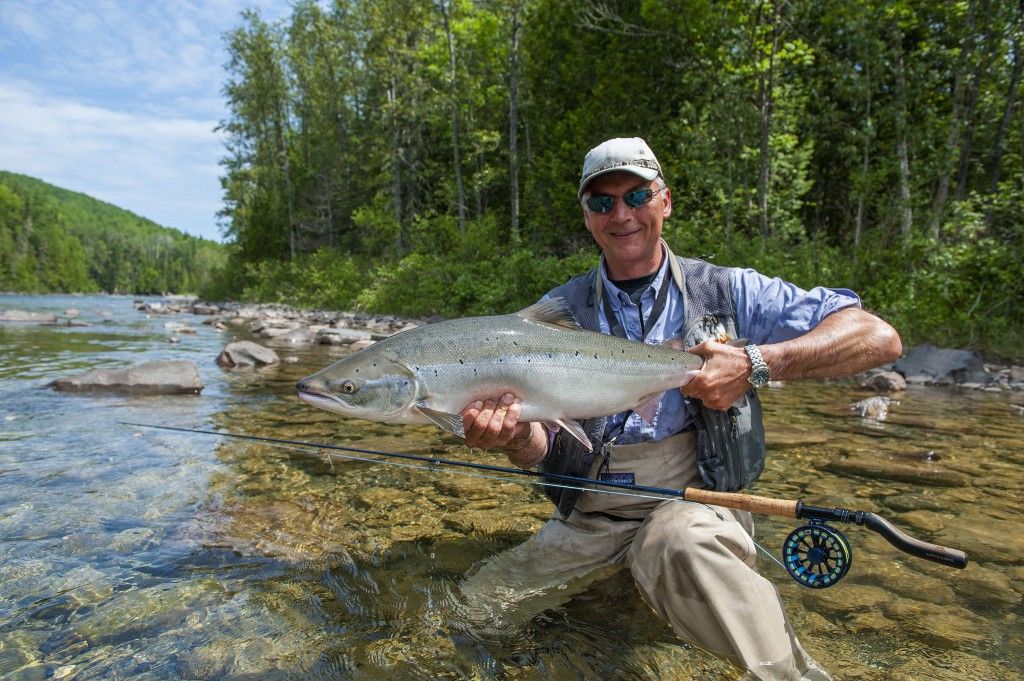
Danish salmon angler par excellence, Mr Henrik Mortensen, with a bright salmon from the Bonaventure River – caught on a medium size Monster Tube Caddis ™
The hatch of the very first Monster Tube Caddis

Finnmark – Norway August 1994 the Caddisfly river
 A unique pool I fish seems to be a regular caddisfly incubator, with deep, slow water at the head of the pool – Rocks protruding here and there. When the time is right, 1000’s caddisfly insects will rise from the river and climb to safety on the boulders – like that shipwrecked person climbing onto the classic islands with only sand and that solitary palm tree.
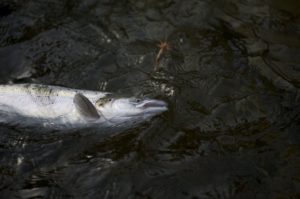
Small salmon hooked on a Monster Tube Caddis ™ – Note how the fly slides freely on the leader.
It was with anticipation and to the beat of my heart I made my way down the narrow trail that led to the pool – The evening had been the start of the hatch of 1000´s of caddisfly insects and the early light of the morning had revealed a shoal of salmon that had moved into the pool during night. During the day I had tied a crude looking version of a caddisfly imitation, and was now ready for the salmon that had settled in the pool. I was surprised to see that some of the fish had moved down to the tail of the pool. Normally I would only see salmon falling back at night-time – But these fish where acting just like brown trout on a summer’s day – feeding away on drifting caddisflies. I soon hooked up with salmon on the dead-drifting caddisfly imitation that I named the Monster Tube Caddis
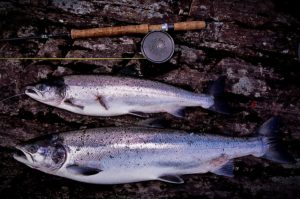 Two bright summer salmon caught on Monster Tube Caddis ™ during a big hatch of caddisfly – The river was crawling with insects, and the local trout and salmon parr was eating away at the insects at a frantic speed… Salmon in the pool acted like trout participating in the feast – Both fish were hooked the first time seeing the fly.
 The caddisfly – an overlooked insect in the world of salmon fishing
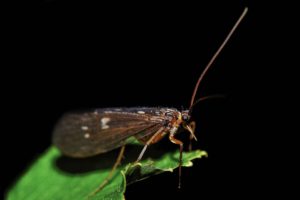 The caddisfly – an overlooked insect in the world of salmon fishing
During summer, many different hatching insects will make their way up from the river bed, some more distinctive than others but all of significant interest to the salmon parr and its trout cousin. These freshwater insects, with their many appearances, serve as their main diet throughout their life as parr and their impact on the growing salmon and trout is a cornerstone in our fly fishing – But the caddisfly is rarely directly portrayed in flies for salmon. Both the larva and the adult insect is present at the river from spring to late autumn, and especially on days with many insects on the water, the salmon and trout parr will focus on the hunt for the caddisfly.
The real McCoy! A two cm. (3/4 inch) big (not including the antennas) specimen from the limnephilidae family curing its wings. When fresh out of the river, this caddisfly has a ginger colour – after curing, it becomes darker brown.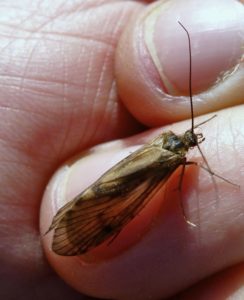 See more images of this fantastic insect
 Monster Tube Caddis: Designed to be fished at dead drift
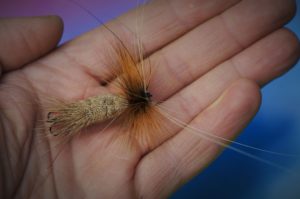 Monster Tube Caddis: Designed to be fished at dead drift
We fish the Monster Tube Caddis at absolute Dead-drift…but we have also received reports from various anglers in Canada and Norway who have had success with a stop-and-go retrieve. The tail of the Monster Tube Caddis has strands of Mylar built-in – We initially put the strands there to keep track of the fly out on the dark water. Anglers fishing for landlocked salmon in Newfoundland have told us how they caught more fish on the fly while the mylar was present – and then fewer fish when the strands of mylar eventually were pulled off by fish.
The Monster Tube Caddis is a favoured fly for Atlantic salmon in Newfoundland
A fly pattern might be perfect for one kind of river, or it may be useful in one region and less so in another. After our initial success with the Monster Tube Caddis in the mid 90’s we made contact with some guides and anglers in Newfoundland. Some where sceptical towards the big insect imitation – but others immediately had success and called us to get new flies. Today the Monster Tube Caddis is widely used on rivers on Newfoundland and mainland Canada
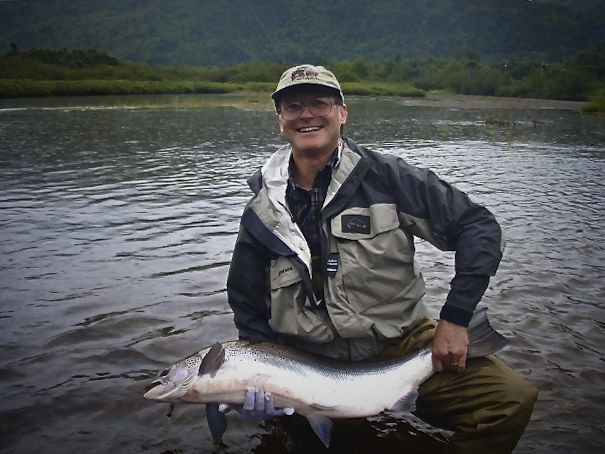
Big salmon: 40 by 21 inches from the Lower Humber caught on Monster Tube Caddis ™. Picture; With curtsy of Mr. Mark Butcher
2010 Fishmadman competition winner
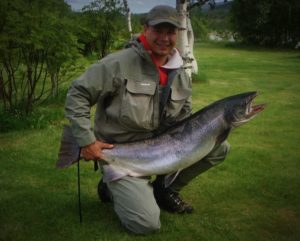
Winner of the 2010 Fishmadman competition Mr Joakim Haugen from North Norway with a giant 17 kg. + salmon (37,7 lb) caught on the Monster Tube Caddis ™ Read the story
Dry fly on the Gaspe River
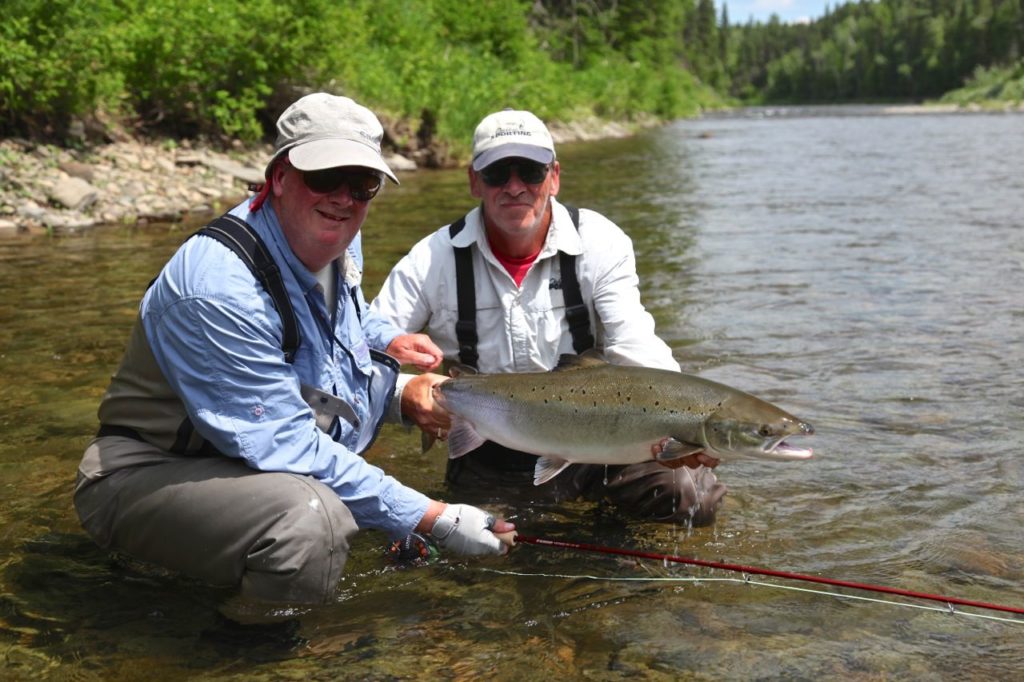
The late Mr Ian Martin, with a beautiful summer salmon from the Gaspe River – caught on the Monster Tube Caddis. Read more from Mr Ian Martin
Yet another from the Gaspe River
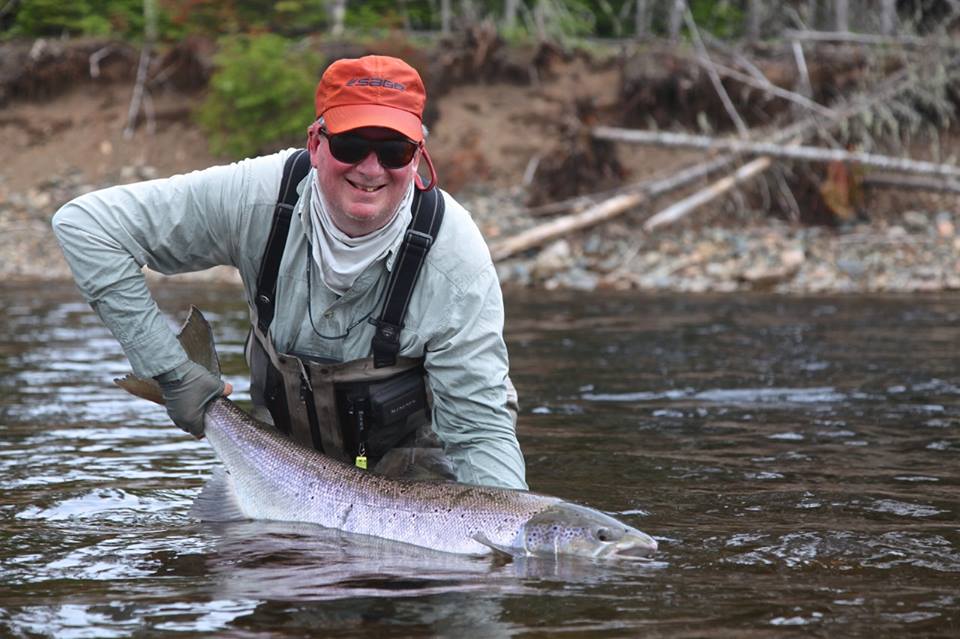
The late Mr. Ian Martin with 44 inches (ca. 36 lb.) caught on the Monster Tube Caddis
Designed for steelhead wake fishing
A much different Monster Tube Caddis made for steelhead
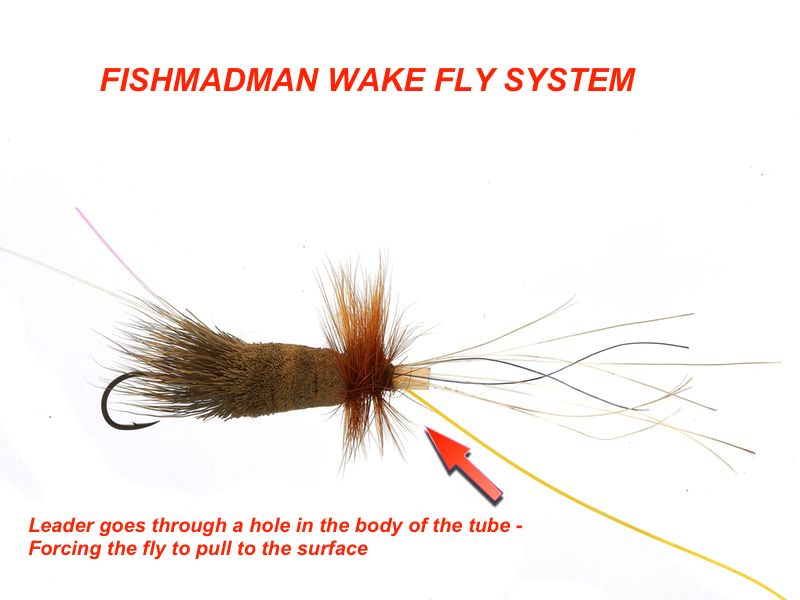
The WAKE version of our Monster Tube Caddis – A design we have perfected over the last years – Is designed for steelhead fishing – but also proved to work for salmon in lakes and rivers – A unique caddisfly imitation to bring curious fish to the top.
Buy the Wake Monster Tube Caddis 
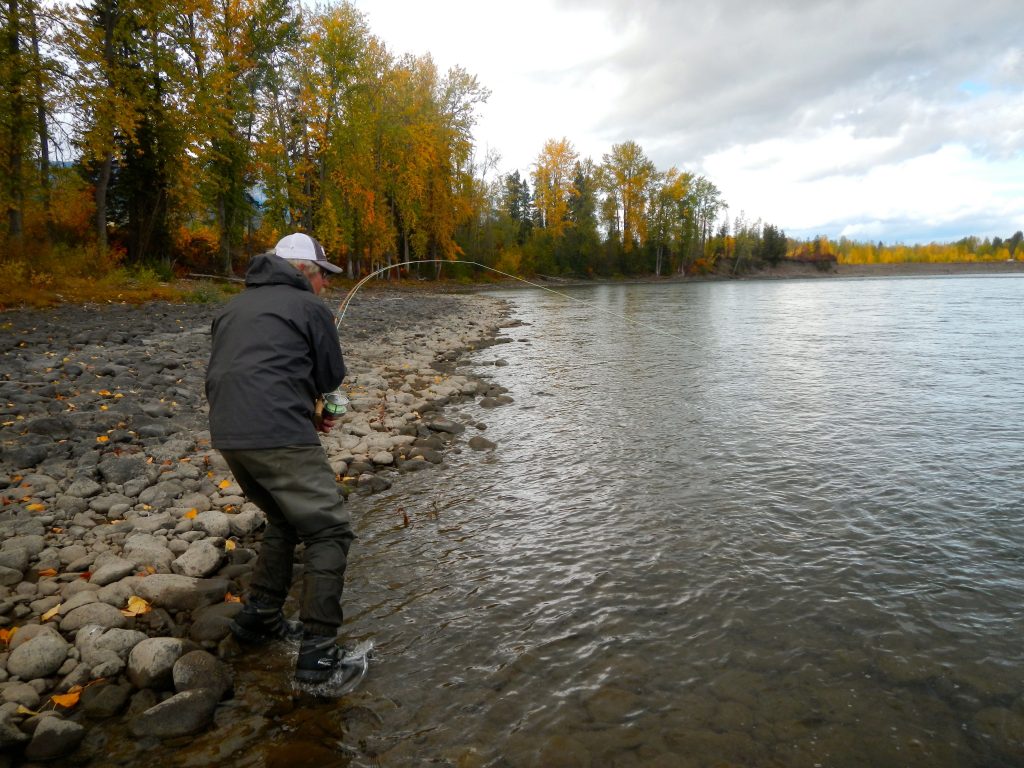
Mr Tom Derry, Director of Wild Steelhead Funding Native Fish Society and avid steelhead angler favours the wake Monster Tube Caddis when fishing steelhead on the top. Here with a tight line on the Babine River.
A special way to tie a tube dry fly to your leader (nerdy stuff warning)
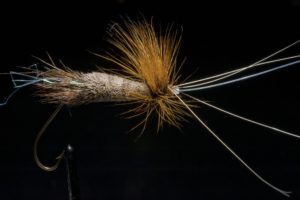
Salmon wake and dry flies on a tube allow the angler to change the hook in multiple ways. You may also change the hooking abilities by using unique knot rigs on the hook.
Here is an exciting way of generating a highly exposed hook on the Monster Tube Caddis – sent to us by a guide and dedicated angler, Mr Bill Bryden, from Newfoundland.
Note that the steep angle at the hook sits on this Monster Tube Caddis, which gives deep hooking in the lower jaw.
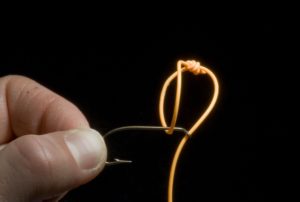
Put line through hook eye from below – Make a single knot on the main line – Make a loop, and turn the end of the leader through the loop twice
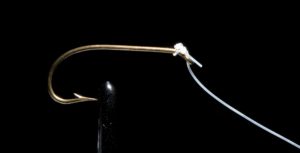
The hook used is a standard down-eye Mustad wet fly hook. The leader is coming out from below the eye.
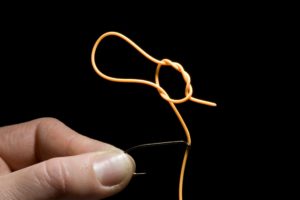
Put the newly formed loop around the hook shank – coming from behind and to ward the front
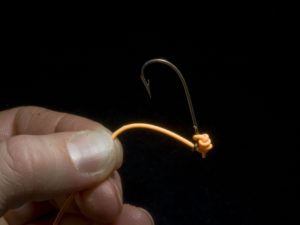
Tighten up and cut away excess line