
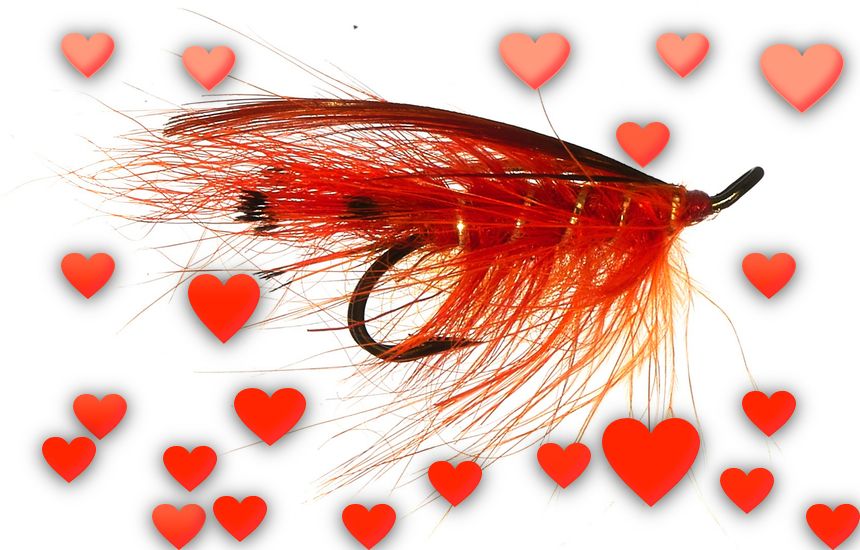
salmon fly in red
How does the salmon see our fly ? – Learn about the psychical dynamics in the Atlantic salmon and why it might react to a particular colour salmon fly
Why is a red salmon fly better at the end of the season ?
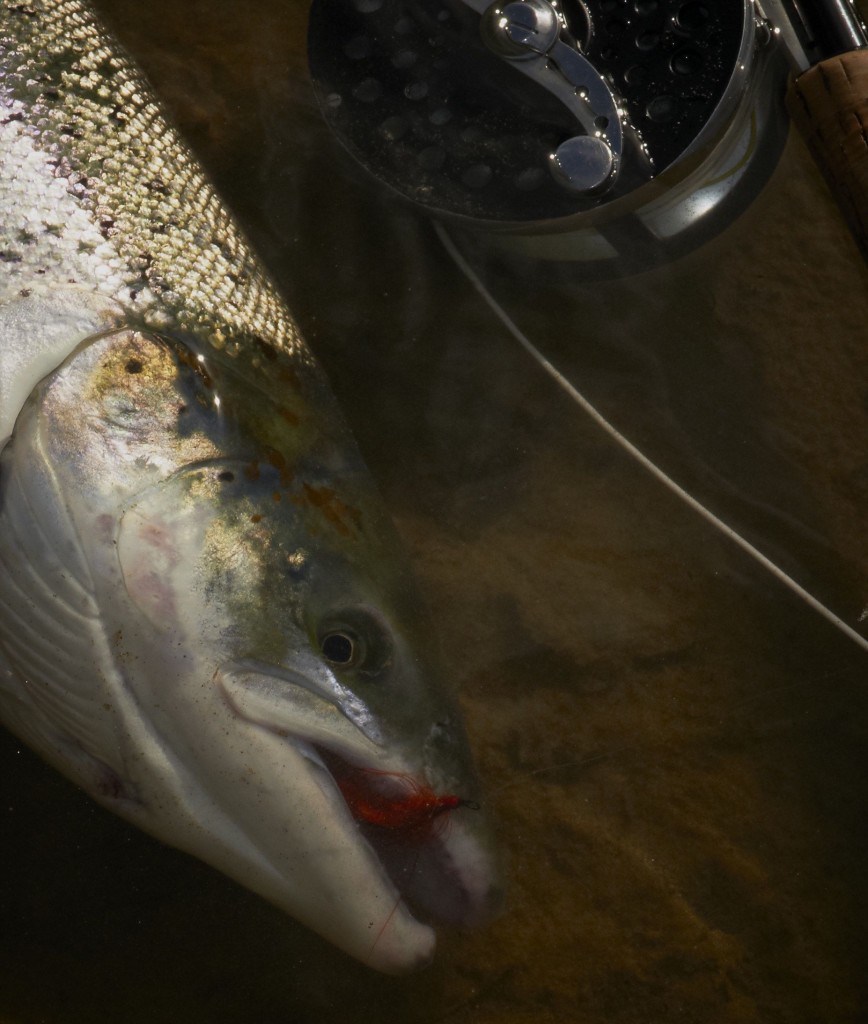 During the life of a salmon it will travel between two very different worlds. Worlds with colours and images are so divergent that it has developed extraordinary abilities to cope with the change of scene.
The eye of the salmon changes physically so the fish can view different colours * – best as possible (* colours being technically explained as different wavelengths of light)
When staying in the river as parr the eyes will be set on: light with a long wavelength. This would be colouring in the orange-brown tone.
In early spring, when the time has come for the salmon parr to journey to the feeding grounds at high sea, the endocrine system glands will produce a new pigment for the eye. This will enable the salmon to focus on light with short wavelengths like; green and bluish colours… Quite handy ! as these are the colours that prey like: sand-eels, sprat and herring have incorporated in their colouration to hide and blend into the sea world.
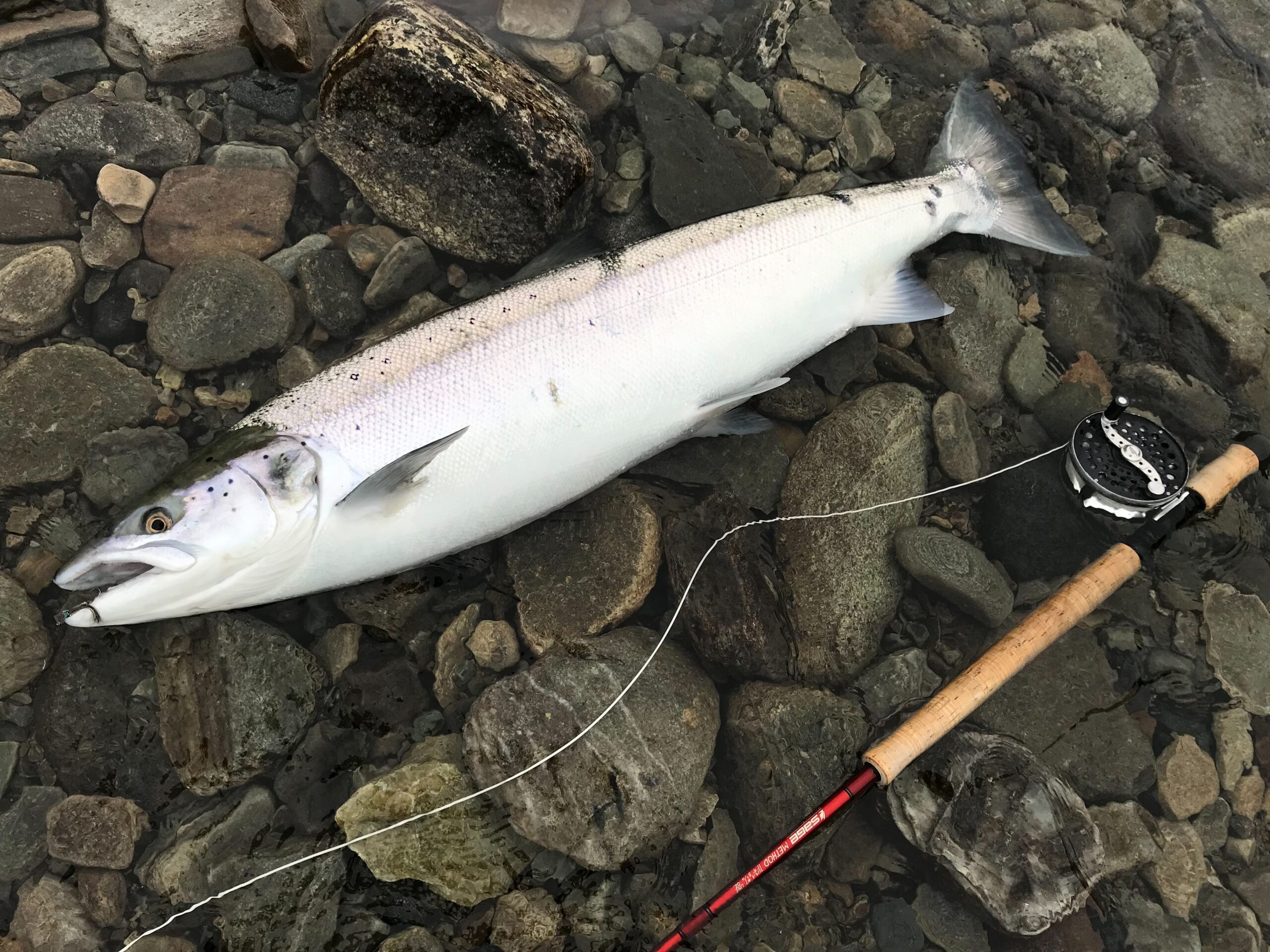
Upon returning to the river to spawn, the fresh silver salmon may still have their eye structure set to sea life setting – and often he will be interested in a salmon fly with blue & green colours… Some of them will be so greedy that they will hit any colour salmon fly, but that is another story… Nevertheless! The endocrine glands will gradually produce another pigment that will transform 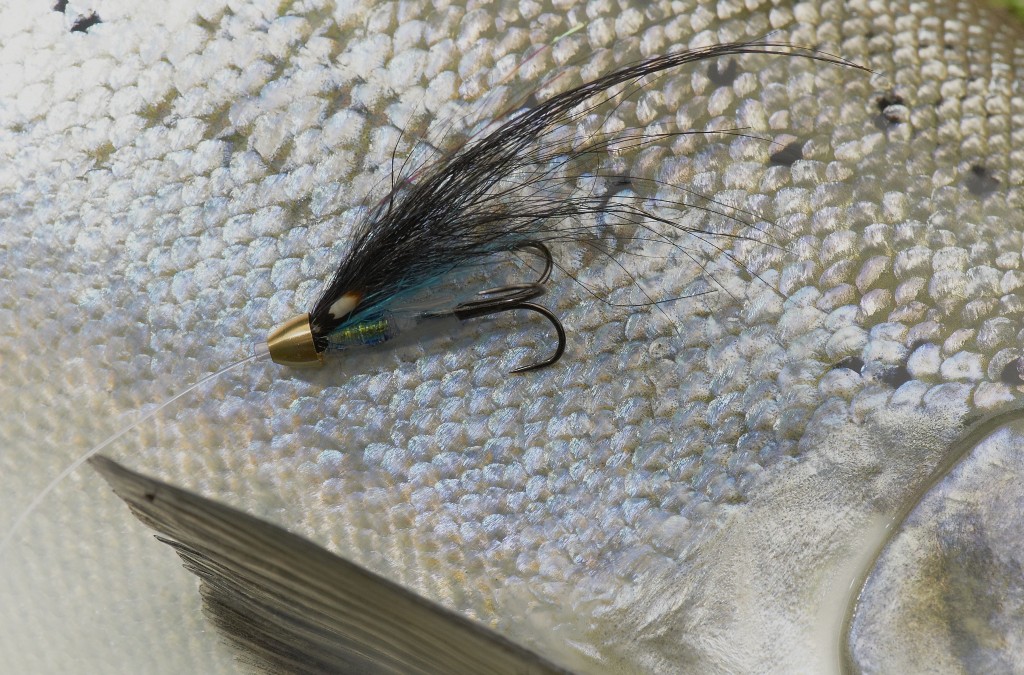 the eye back to its original freshwater setting – with abilities to focus on red, orange and brown colours – Something also reflected in the colours of the skin pigmentation. The many patterns in brown, orange and red seen on male salmon – are not just eye candy brought on for the sake of women – They are fully lit warning posters to rivalling male salmon.
Special thank you goes out to Kim Rasmussen from Salmonfly.dk for advice.

Related Posts

This Post Has 0 Comments