
 That, to me, would be a really interesting fly rod.
Atlantic salmon enter a completely different world when they leave the ocean and move into freshwater. Explore how marine prey, aquatic insects and the movement of nymphs through the water can inspire a different approach to salmon fly fishing – and discover the Fishmadman Heavy Dwarf concept.

NEWTON – Longer Rods, Longer Casts and Gravity
“`html
Almost 10 Years Later
Back in December 2016, I wrote an article in a Danish magazine about long single-handed rods, switch rods, long casts – and, perhaps most importantly, gravity.
I recently found the old working draft again, and it made me think about how much has changed since then. But also about how much has not changed.
Because Newton is still at work.
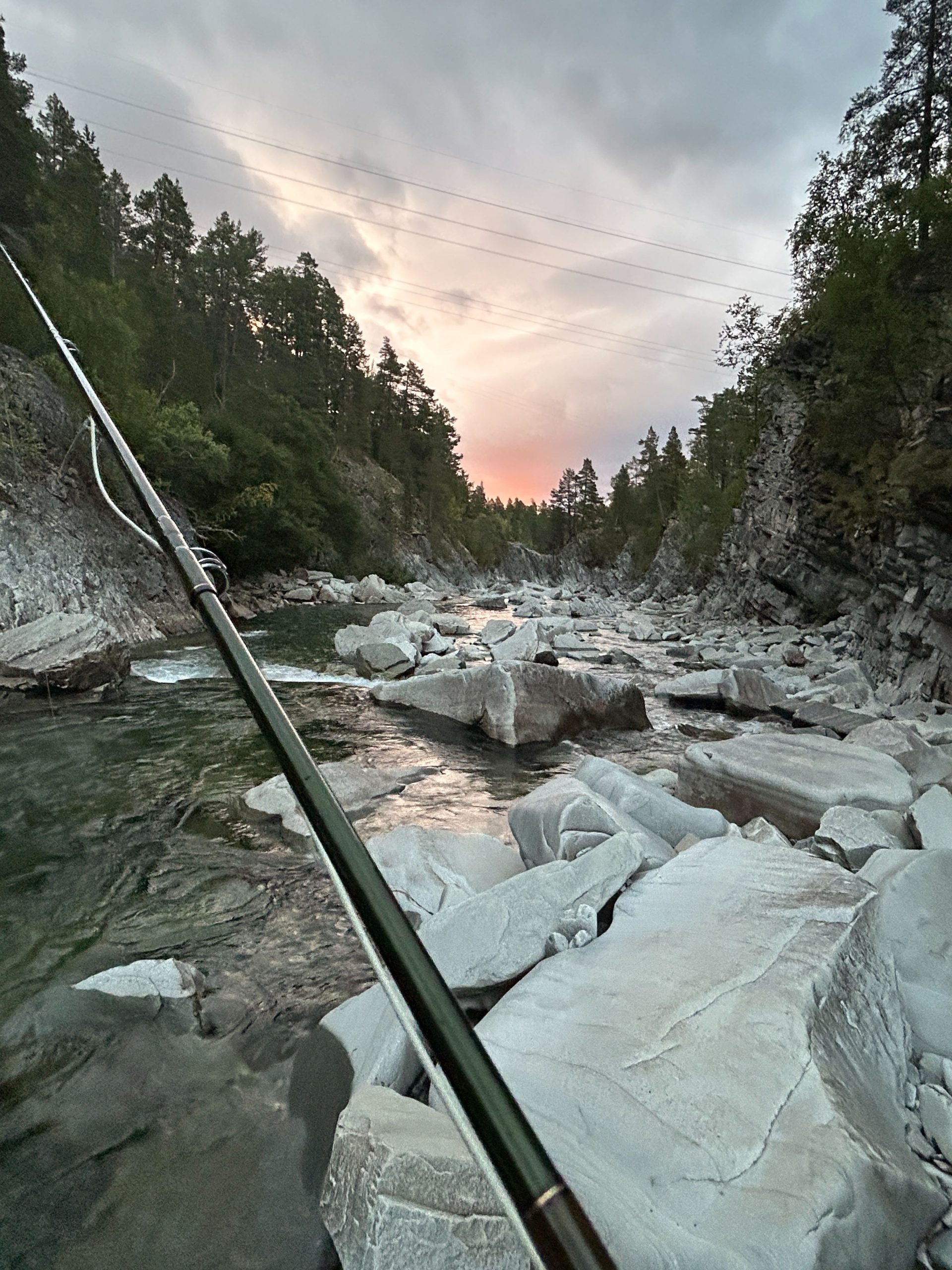
For those who are not familiar with the rods I use for my own fishing, I often fish with switch rods in the 11–12 foot class. Not necessarily because I use them as traditional switch rods – in fact, I very rarely do. I primarily use them as long single-handed rods.
That gives me a few extra options that I really value: more height, better control of the line and fly, and, not least, an advantage when casting long or fishing with riffling hitch.
Perhaps especially for those of you who fish in much the same way I do, and who have also discovered that a long rod can do something rather special.
So here are some thoughts about long rods – and about the force we all have to deal with every time we send a fly line into the air.

Newton
There is a certain inevitability to gravity. You can fight it, you can cast against it, and you can send a fly line high into the air and try to keep it there for as long as possible.
Isaac Newton gave us the mathematical description of gravity that has become one of the foundations of classical physics:
F = G m₁m₂ / r²
But eventually, what goes up must come down. The line goes up – gravity pulls it down.
In Search of Longer Casts
I have been casting fly lines for more than 50 years. For much of that time, I have been fascinated by the perfect long cast.
Not simply because distance is important. It is not.
But because a long cast makes you understand what is really happening between the rod, the line and the leader.
There is air resistance. There is friction. There is the weight and profile of the line. There is the rod loading and unloading. There is the shape of the loop. And there is gravity.
A fly line does not simply travel forward because we tell it to. It travels because we have transferred energy into it and created the right conditions for that energy to continue moving the line through the air.
Over the years I have worn out lines, experimented with different shooting heads and spent an unreasonable amount of time trying to find those extra few metres.
Sometimes it works. Sometimes it doesn’t. And sometimes Newton wins.
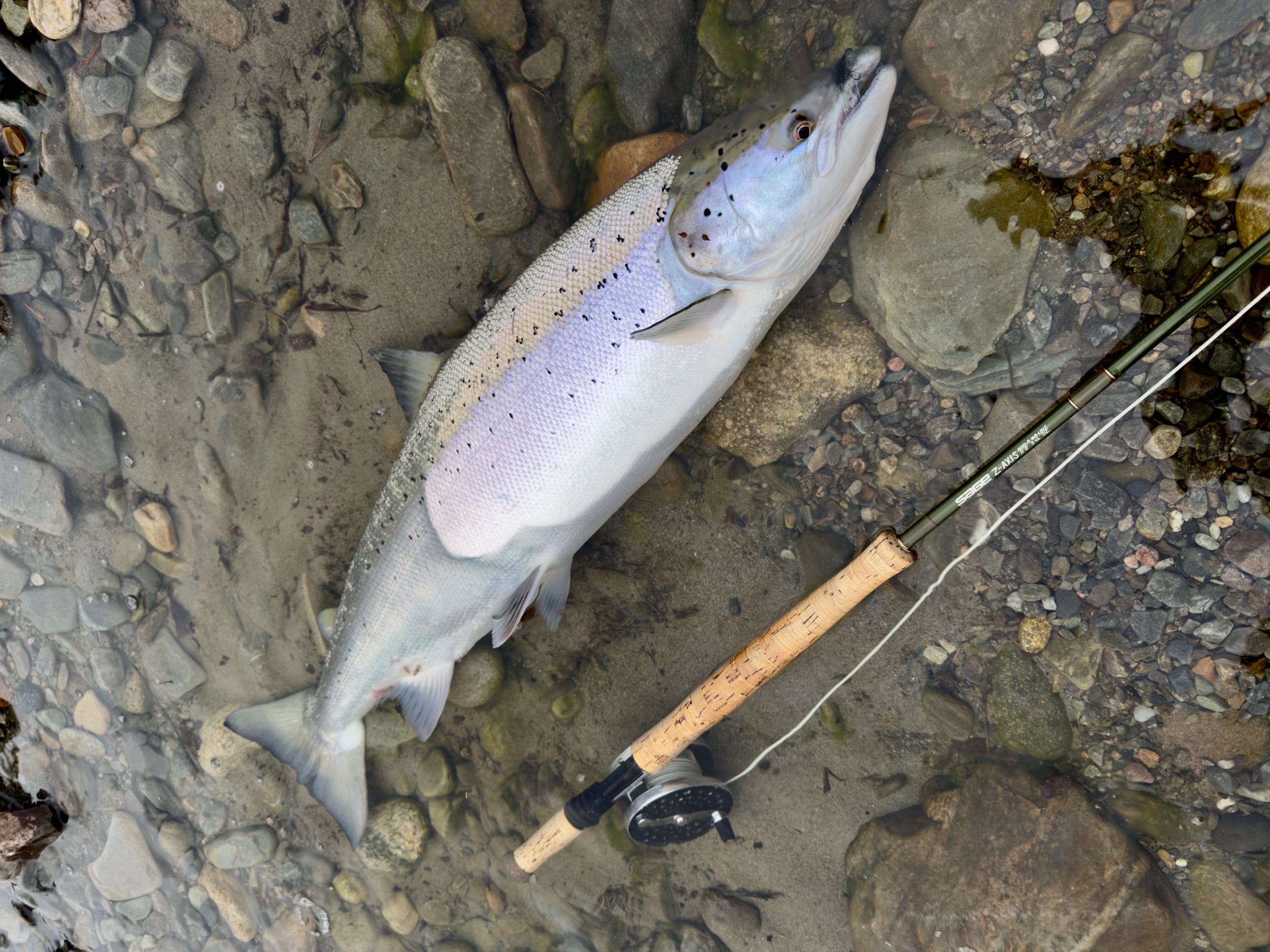
Height, Reach and Longer Casts
I am 179 cm tall. That may not sound particularly relevant to fly fishing, but when you are standing in the river, every centimetre of additional reach can matter.
People who are naturally tall have an advantage when casting. Their starting point is simply higher.
A longer rod gives you more height above the water. It gives you more reach. It can help keep more line away from vegetation, and it can make it easier to mend and control the line.
And when fishing a riffling hitch, that extra length can be particularly useful.
The same applies to rivers where you simply do not have room for a conventional casting stroke. Some Danish streams are heavily overgrown, and in those situations a long rod can give you options.
The same applies when fishing Norwegian rivers with a riffling hitch.
Instead of thinking only about the rod as a casting tool, I tend to think of it as a tool for controlling the entire fishing situation.
Long Single-Handed Rods – A British and Irish Tradition
Long single-handed rods are not primarily a product of the modern American fly-fishing tradition. There is a much older British and Irish tradition of fishing with long rods.
Rods over ten feet were not unusual. Companies such as Hardy, Sue Burgess and Bruce & Walker produced their own long versions. Typically, these were #6–8 rods designed for drift fishing or lighter river fishing.
The long single-handed rod could easily set up another cast by rolling or switching the line forward. At the same time, it made it possible to make a relatively safe overhead cast over a boat with several other anglers.
A long single-handed rod is also extremely useful when handling a long leader with several flies – a form of tackle widely used for lake fishing in England and Ireland.
The advantage of a long rod is therefore not simply:
longer rod = longer cast.
It is much more interesting than that.
A long rod can provide more height, greater reach, better line control, better fly control and improved mending. It can also be useful when fishing multiple flies, when fishing a riffling hitch, when dapping and, of course, when making long casts.
They understood the long rod as a fishing tool – not merely as a way of making a longer cast.
This is one reason I find the older British and Irish traditions so interesting.
Richard Walker, Farnborough and the Arrival of Graphite
Hardy and other British manufacturers produced long rods for a wide range of fishing techniques. There were, however, exceptions to the shorter, long-distance coastal rods of the time, such as Hardy’s Richard Walker Farnborough rods, which were produced in some relatively long and long-casting versions.
Richard Walker, who gave his name to this and other rod series, worked closely with Hardy Brothers for several years to implement the then new and revolutionary graphite fibres in fishing-rod production.
The graphite fibres had recently been developed by the English company RAE Farnborough – the Royal Aircraft Establishment – for use in aircraft, boats and racing cars.
The arrival of modern graphite changed things dramatically.
Graphite made it possible to produce rods that were both considerably lighter and considerably stiffer than earlier materials. That opened the door to new rod actions and new casting possibilities.
Modern long rods are therefore not simply longer versions of old rods. They are products of decades of material development and rod design.
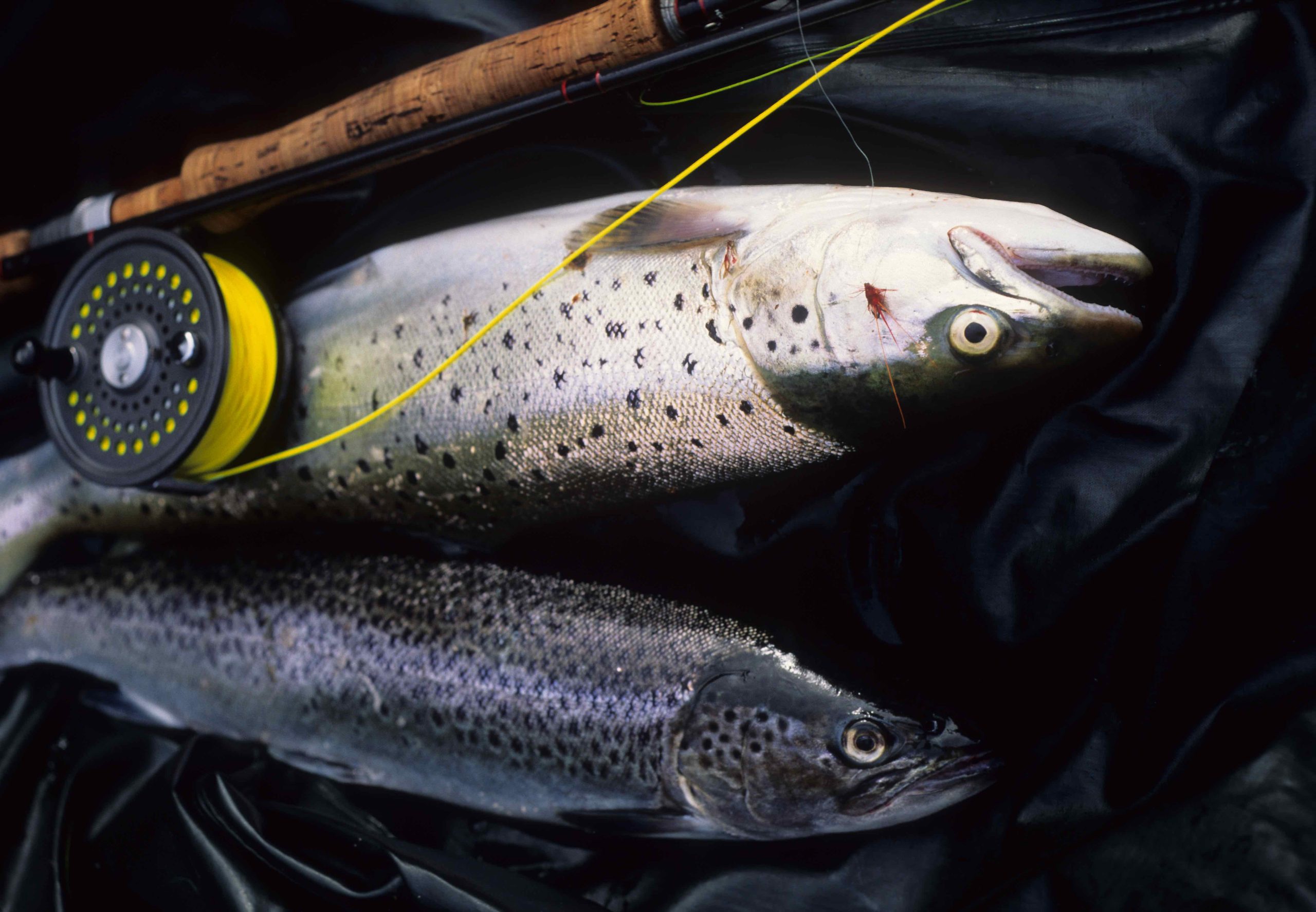
My own Hardy Richard Walker Farnborough from the 1990s — a 9’3”, two-piece, #8/9 graphite fly rod, developed from Hardy’s pioneering work with RAE Farnborough carbon fibre. It features the classic black reel seat with aluminium screw fitting and an ingenious fighting butt that simply slid into the hollow butt section. I always kept it in place, as it suited my casting style — much like the way I cast my switch rods today.
Loch-Style Fishing
Loch-style fishing is a classic British and Irish approach to fishing stillwater with several flies on the leader.
A team may consist of two or three flies. The bob fly is the top fly, fishing closest to the surface. The middle fly is positioned between the bob fly and point fly, while the point fly is the deepest fly at the end of the leader.
The long rod provides control over the whole system. The angler can manipulate the line, maintain contact with the flies and work the flies across the surface and through the waves.
The long rod is therefore not simply about casting distance.
It is about control.
Dapping
Dapping is a classic long-rod technique, particularly associated with Irish lake fishing.
A very long rod is used together with floss and a dry fly or natural mayfly. The fly is held and moved across the surface of the water rather than being fished in the conventional way.
The long rod gives the angler the reach and control needed to keep the fly on the surface and move it naturally.
Again, the lesson is the same:
A long rod is not only a casting tool.
Long Rods in Practice
For my own fishing, the attraction of a long rod is very practical.
I fish rivers where I need height. I fish for salmon and sea trout. I fish riffling hitch. I sometimes need to keep line away from bankside vegetation, and I often want to control a fly and line at considerable distance.
A rod in the 11–12 foot range gives me something that a conventional 9-foot rod simply cannot.
It gives me more leverage, more reach, more height and more control.
The important point is that I am not necessarily using the rod as a traditional switch rod.
I am using it as a long single-handed rod.
That distinction is important.

Cast with Your Arm – Not Your Wrist
One of the first lessons I learned about long casting came from my childhood friend Per Raabo.
We were both skinny kids when we fished together along the North Zealand coast. Our rods were fibreglass – heavy, soft rods compared with the rods we use today.
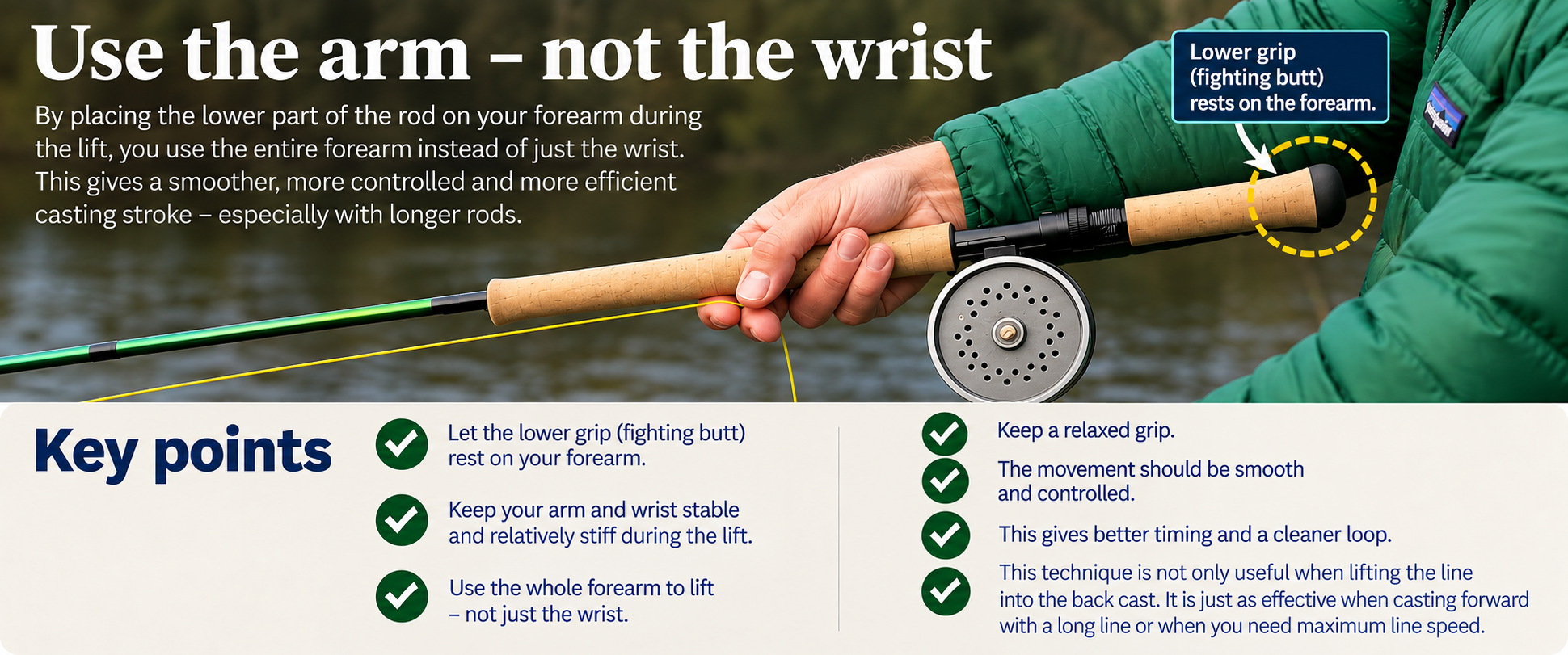
We laid the rod well back into the back cast and did not use the wrist when casting. Instead, we cast with a fairly stiff forearm, resting the fly reel and the butt of the rod against the forearm.
I still use this simple way of casting today.
It allows me to lift and carry a long line in the air while keeping the rod under control, even when the line speed is high. I find it particularly well suited to long rods, which are, relatively speaking, heavier than their shorter counterparts.
The lesson was simple: use the arm.
Do not try to generate the cast primarily with the wrist.
The movement should be controlled and efficient.
The rod does the work. You do not need to fight it.
The Switch Rod – The Long Single-Handed Rod
The word “switch” is interesting. It suggests changing from one method to another.
A modern switch rod is normally somewhere around 10–12 feet long and is designed to allow different casting techniques. It can be used with spey-style and roll casts, but it can also be used as a single-handed rod.
The longer rear grip, fighting butt and overall design make it different from a conventional single-handed rod.
But don’t let yourself be influenced too much by what the manufacturer has chosen to call the rod.
If it is a modern 11- or 12-foot switch rod, you can probably use it perfectly well as a single-handed rod.
But for me, the really interesting thing is what happens when you simply take that long rod and fish it single-handed.
You gain several extra feet of height and reach. And those extra feet can make a surprising difference.
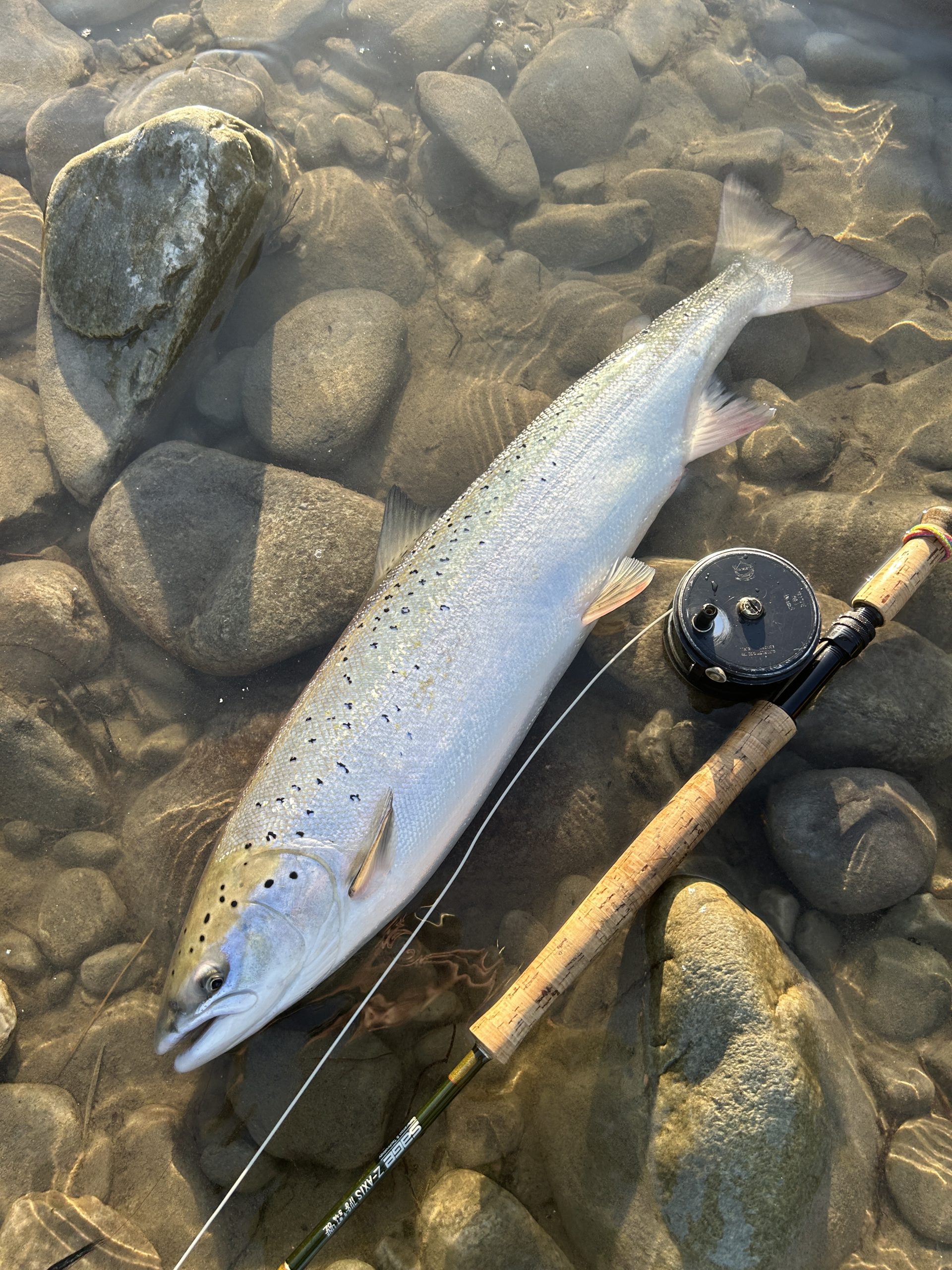
What Is a Switch Rod?
A switch rod sits somewhere between a traditional single-handed rod and a two-handed rod.
It is long enough to allow spey and roll casting, but can still be used with one hand.
Modern switch rods are commonly found in the 10–12 foot range. They usually have a longer front grip and a rear fighting butt or lower grip section.
For salmon and steelhead fishing, they can be extremely versatile.
But that versatility does not mean that you have to use them as traditional switch rods.
For my own fishing, I often prefer to exploit the length and use the rod single-handed.
That is where the extra reach becomes particularly interesting.
Why I Use Them Single-Handed
I like long rods.
I like the extra height. I like the extra reach. I like being able to control the line. And I like being able to keep the fly moving exactly where I want it.
When fishing a riffling hitch, these things become even more important.
The long rod allows me to work the fly high and across the current. It gives me better control over the line and leader. And when a fish takes, the additional length gives me another tool for controlling the fight.
This is not about saying that everybody should fish an 11- or 12-foot rod.
They shouldn’t.
It is simply about understanding what the extra length gives you.
Fast Action Rods
For many years, modern fly rods were increasingly designed around fast actions.
The idea was simple: make the rod lighter, make it faster, make it powerful and make it cast farther.
Rods such as the old Sage RPLX series were very much part of this development. They were powerful, stiff rods designed for distance and control.
But there is a price to extremely fast actions.
A very stiff rod can become demanding. It can be less forgiving at close range. And when you are fighting a fish at short distance, a very powerful rod does not necessarily make things easier.
Sometimes you need the rod to absorb. Sometimes you need the rod to bend. Sometimes you need something softer.
Hard or Soft?
I have always found the difference between hard and soft rods interesting.
A hard rod gives you power. A softer rod gives you feel.
A stiff rod can become a problem when fighting a fish at close range. A very stiff rod does not absorb a fish that thrashes and jumps as easily, simply because it is harder to create a cushioning curve in the rod without putting considerable pressure on the fish. Consequently, you can risk losing more fish.
A stiff rod can, however, be an advantage when you need to make a quick strike on a long line.
And don’t believe that stiff rods are necessarily better at holding a fish in strong current. Larger fish in strong current are a challenge regardless of which fly rod you are fishing with. Most modern switch rods have plenty of power in the lower part of the rod, allowing you to put pressure on the fish when you need to.
With a softer rod, the rod can absorb the movement of the fish. It can make the fight more dynamic. It can also make casting feel very different.
Modern graphite has made it possible to create rods that combine characteristics that were previously difficult to achieve.
That is one of the reasons I find today’s longer rods so interesting.
A long rod does not necessarily have to be a broomstick.
It can be long, light, responsive and relatively soft.
For the kind of fishing I do, that combination can be extremely useful.
Gravity Wins
After all these years, I still enjoy trying to cast farther.
I still enjoy finding the perfect loop. I still enjoy the feeling when the line straightens exactly where I want it.
But there is one thing I have learned.
You can fight physics. You can try to outsmart it. You can build better rods, design better lines and improve your technique.
You can make longer casts.
But gravity always wins.
The line goes up. The line travels. The line slows down.
And eventually, gravity brings it back to earth.
Perhaps that is why long rods are so fascinating.
They give us a little more time, a little more height, a little more reach and a little more control.
And perhaps, if we get everything right, a few more metres.
But sooner or later…
GRAVITY WINS.
“`

Related Posts

Comments (0)